

Cincinnati, Ohio, has had many monikers, including “The Queen City,” “Athens of the West,” “Paris of America,” and “The City of Seven Hills.” There was also “Porkopolis,” which resulted from the meat processing businesses located downtown. (Residents were relieved when Chicago replaced Cincinnati as the leading meatpacking capital in 1861.)
Yet even as one reputation was fading, another was taking shape.

For more than a century, Cincinnati was known as “Coffin City,” the country’s primary producer of coffins, caskets, and burial vaults. This growth occurred because funeral furnishings merged nicely into the city’s existing industrial base. There were furniture factories, woodworking shops, and metal-good manufacturers, all the necessary elements for modern coffin construction. But Cincinnati also had the Ohio River and several railroad lines to bring in supplies and ship out finished products. Coffins were a natural fit into the transportation and distribution networks already set up.
Cincinnati became the Coffin Capital of the U.S. during the mid-1800s with the founding of two primary companies and several smaller shops that provided burial vaults, funeral furnishings, and other death-care supplies.
Almond D. Fisk
Cincinnati’s rise as “Coffin City” can be traced to Almond D. Fisk (1818 – 1850), the inventor of the metal casket.
Fisk began as a merchant selling cast-iron stoves in Manhattan. When his brother William died in Mississippi, Fisk set about to create a new type of coffin, one designed to preserve the body for long-distance transport.
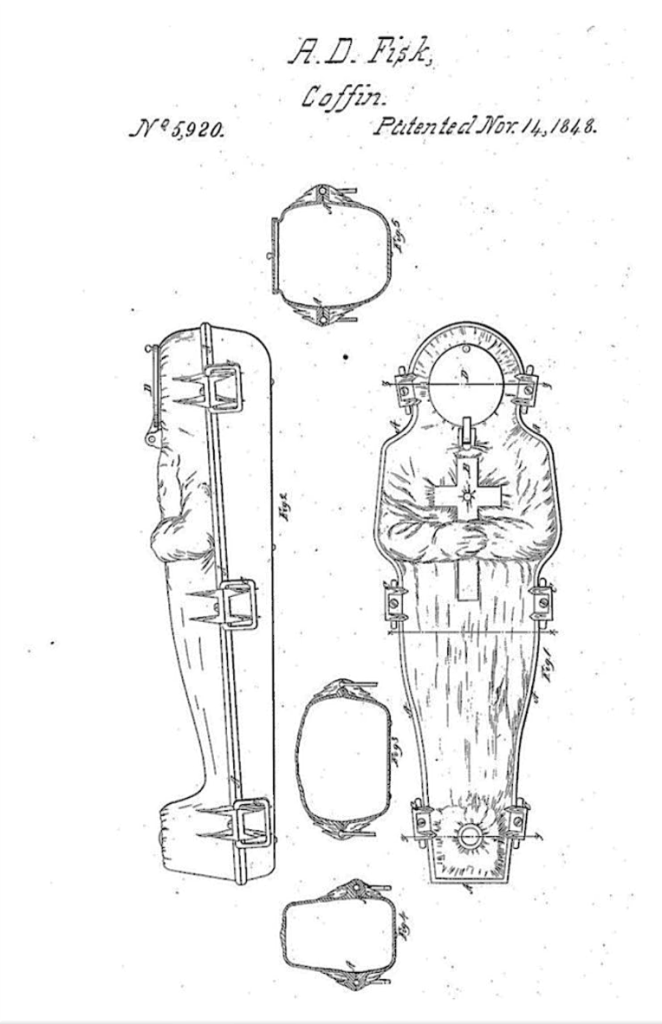
By the mid-1840s, Fisk had developed an airtight metallic burial container, and on November 14, 1848, he received a patent for his cast-iron coffin.
The Fisk Metallic Burial Cases were “mummy-shaped” cast-iron coffins that sold for $100, around $4,100 today. The coffin featured a glass viewing window that allowed mourners to see the face of the deceased while avoiding the odors or potential exposure to diseases such as yellow fever and cholera, which were often associated with old-fashioned wooden coffins. Dolley Madison was buried in a Fisk casket, creating an interest from wealthy families and politicians in all of the above features, plus the ability to deter grave robbers.
But during the autumn of 1849, fire swept through the Fisk manufacturing buildings, destroying the tools, specialized machinery, and dozens of finished metallic caskets. After a walk-through of the charred remains, it was obvious, The Fisk Metallic Burial Cases Company was finished.
Almond Fisk died a year later, destitute. But his invention went on.
Major Coffin Makers
Crane Breed & Company
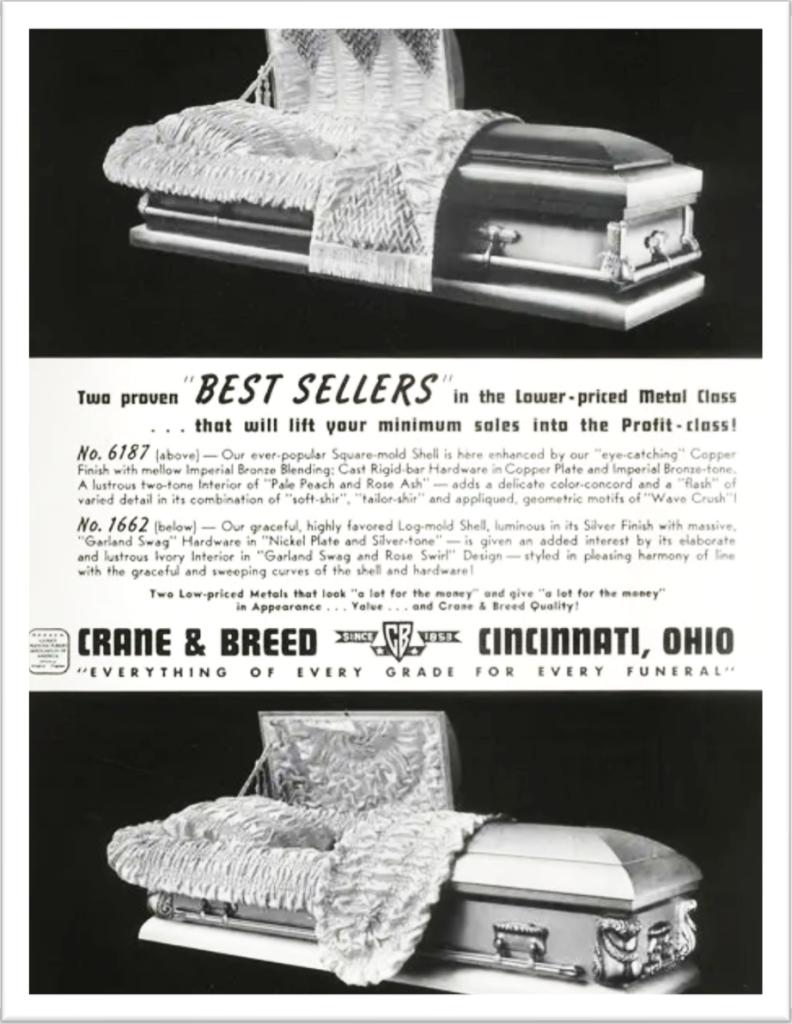
Crane & Breed (1853-1977) was one of two major casket makers in the city at the time. But it was Crane, Breed and Company that changed the coffin business forever after releasing a rectangular metal casket.
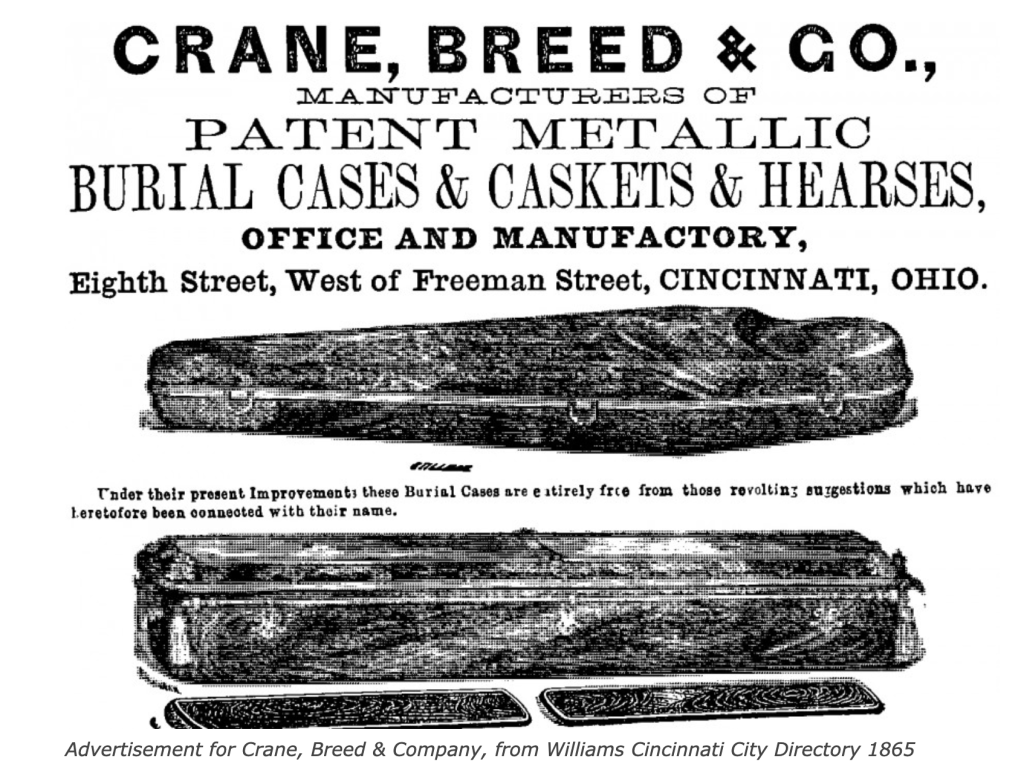
Company founder, Martin Crane, purchased the Anchor Iron Works coffin-making section in 1853, and became the first to manufacture a metal casket in 1857. Inspired by the work of Almond D. Fisk, the company went on to produce the first rectangular, sheet-metal caskets in the world. This helped establish it as the leading manufacturer of metal coffins.
Crane & Breed’s most popular design was the Ever-Seal, a hermetically sealed casket, released in 1862. Touted to be “air and water tight,” it became the luxury line of metal caskets. In fact, this type of casket was selected for President Abraham Lincoln’s burial in 1865.
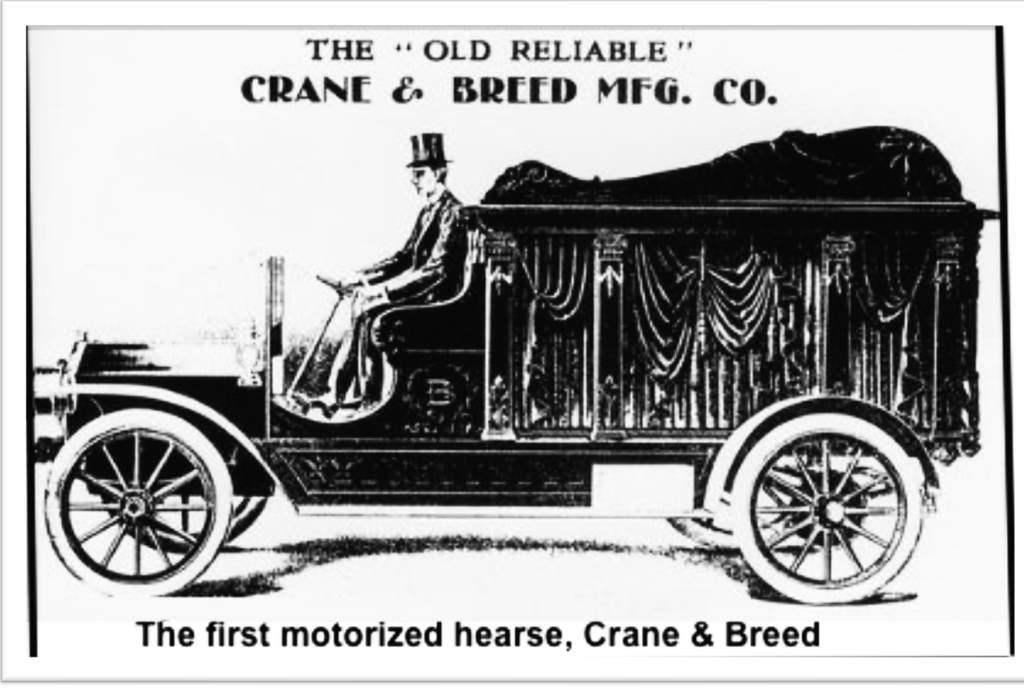
Crane & Breed went on to manufacture hearses, funeral coaches, and ambulances during the early 1900s, releasing the first gasoline-powered hearse in 1909. From 1912 to 1917, Crane & Breed produced custom hearses and ambulances. The hearses were known for deeply polished wood, distinctive bodies, ornate hardware, and glass-sided compartments.
The ambulances were designed with custom bodies to provide a more stable ride for the patient. By 1917, Crane & Breed had discontinued the manufacturing of automobiles.
During the twentieth century, Crane & Breed introduced a stainless steel casket. The company went out of business in 1977, making it the longest-operating casket manufacturer in Cincinnati.
W.C. Davis and Company
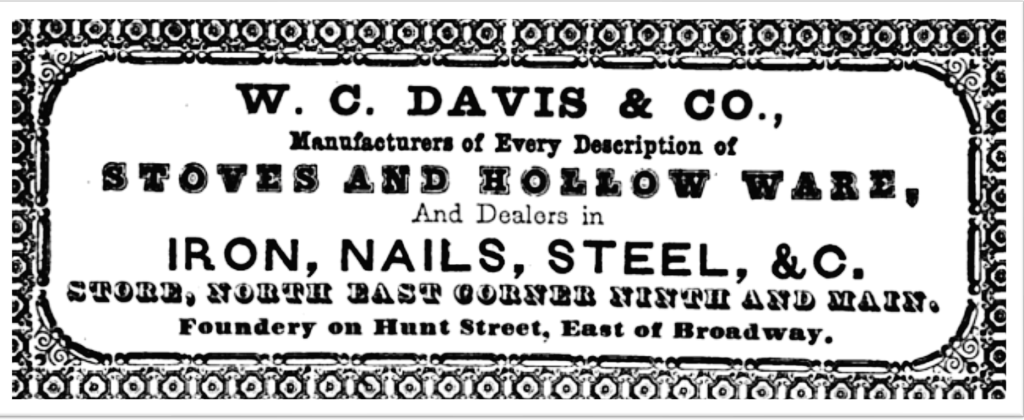
W.C. Davis and Company (1850s – 1899) was another “manufacturer of coffins, burial cases, and funeral furnishings.” The company began by making traditional wooden caskets, but in 1852, advertised itself as “the only local coffin company that had been licensed by Almond D. Fisk to manufacturer his Fisk Metallic Burial Cases.”
The company prospered for several years but by the 1880s, W.C. Davis had transitioned into a cast-iron and stove company and had relocated to Piqua, Ohio. There were no mentions of caskets in its late nineteenth century catalogs.
Cincinnati Coffin Company
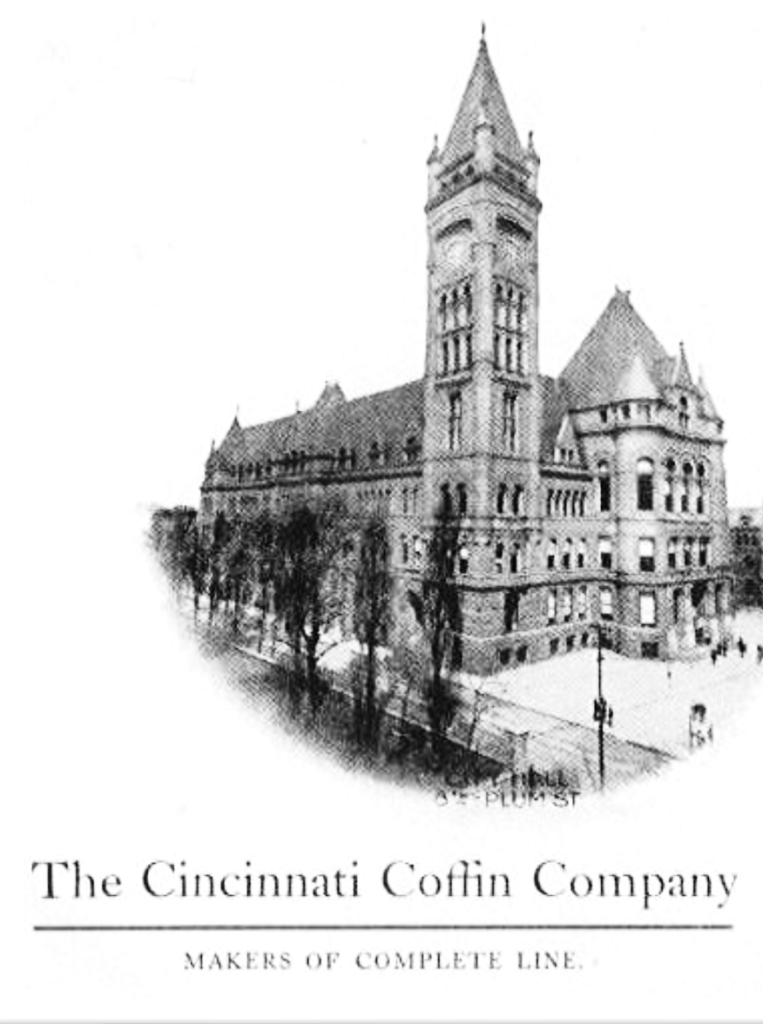
The Cincinnati Coffin Company (1850s – 1940s) began in the 1850s. It expanded quickly during the 1860s, and by the 1870s, it was producing metallic and rectangular caskets along with other variations, including draped coffins and wooden coffins covered in broadcloth.
But the company was rocked by controversies and scandals for several years, according to local newspaper headlines.
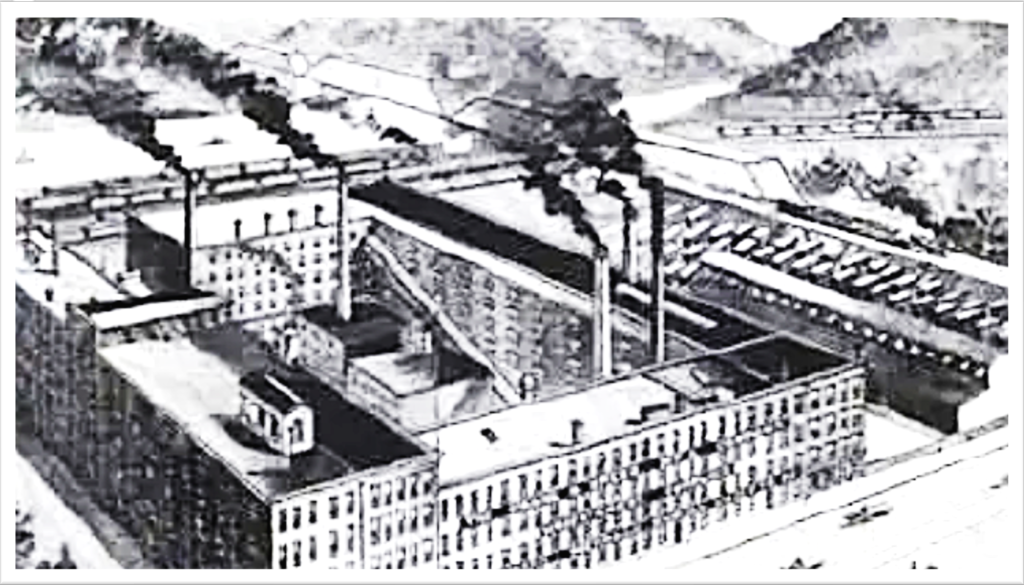
The Cincinnati Coffin Company expanded during the early 1900s and built a factory that encompassed more than a city block. It became one of the largest coffin suppliers in the U.S. and held that title until the mid-20th century.
While the exact closure date is not given, Cincinnati Coffin Company began losing the funeral trade in the 1950s, when smaller factories began consolidating, and national casket corporations began their rapid expansion.
Numerous furniture companies and shops also produced wooden coffins, glass inserts, coffin linings, and hardware for the city’s thriving funeral industry.
World War Two

World War II had a huge effect on “Coffin City.” After the U.S. entered WWII, the casket industry shifted to wartime production. Crane & Breed had experience in metal fabrication and could make a quick pivot to building war-related components. Cincinnati Coffin Company remained a coffin manufacturer, and continued to produce caskets for local and military use.
Batesville Casket Company

Batesville Coffin Company was founded in 1884 as a small Indiana workshop producing ornate, hand-carved wooden coffins. But as the industry embraced metallic caskets, the company found itself struggling.
In 1906, John A. Hillenbrand purchased the company and renamed it Batesville Casket Company. Under his leadership, Batesville Casket began its rise as a national manufacturer of funeral products. In 1918, the company introduced metal caskets. By the 1940s, it touted a line of “gasketed protective caskets.” By mid-century, the company had become one of the leading funeral-product manufacturers in the U.S., reshaping the industry nationwide.
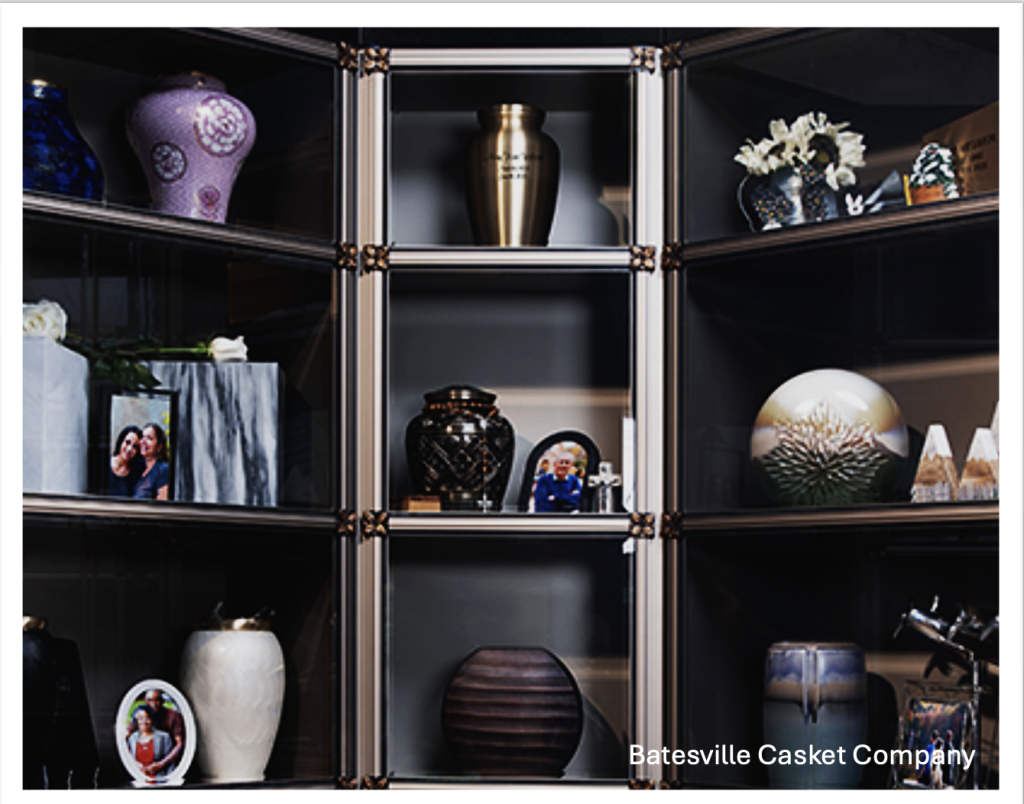
Recognizing that personalization was the new industry strategy, Batesville introduced its “Options Cremation Line,” offering urns, jewelry, vaults, along with a range of personalized items.
At the close of the 20th century, Batesville Casket dominated the national death care market, with numerous manufacturing plants across the U.S.
Batesville Casket Company, located in Batesville, Indiana, forty miles west of Cincinnati, is now the largest supplier of caskets and funeral industry solutions in the country.
The U.S. remains the center of the death-care market and continues to lead the $147-billion dollar global industry.
Joy