

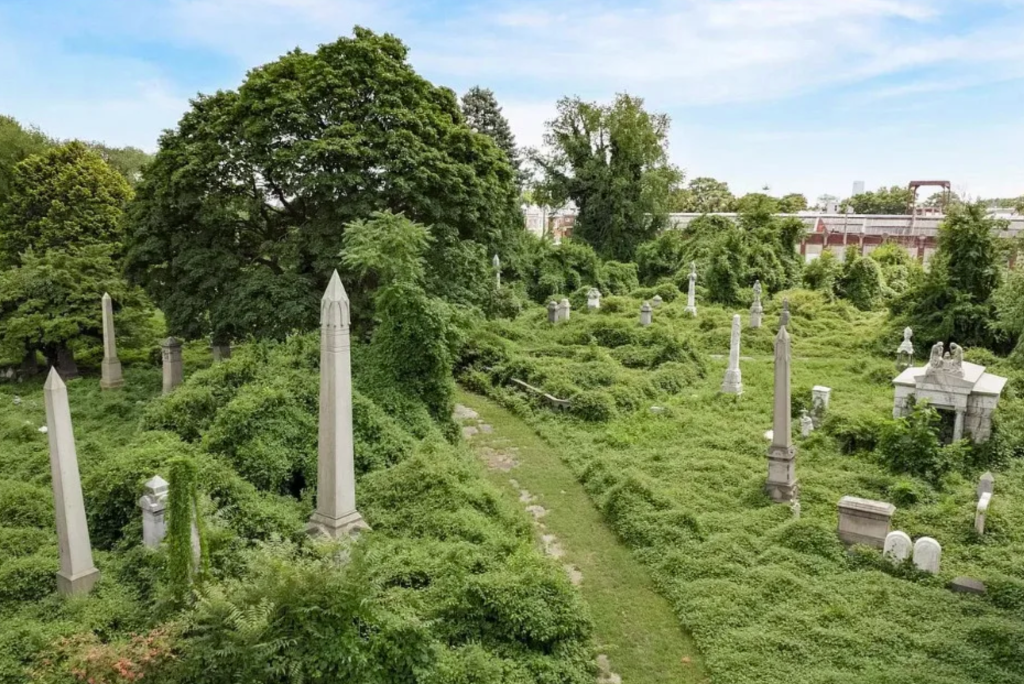
If you have ever searched for a cemetery and not been able to locate it, one thought might be that it was relocated, paved over, or simply forgotten as the town expanded. This could have happened for several reasons, but the main one seems to be that the town grew faster than expected, and the smaller cemeteries located at the edge of towns became prime real estate. Once these bundles of land were incorporated into the city, most were eventually sold for urban development and expansion.
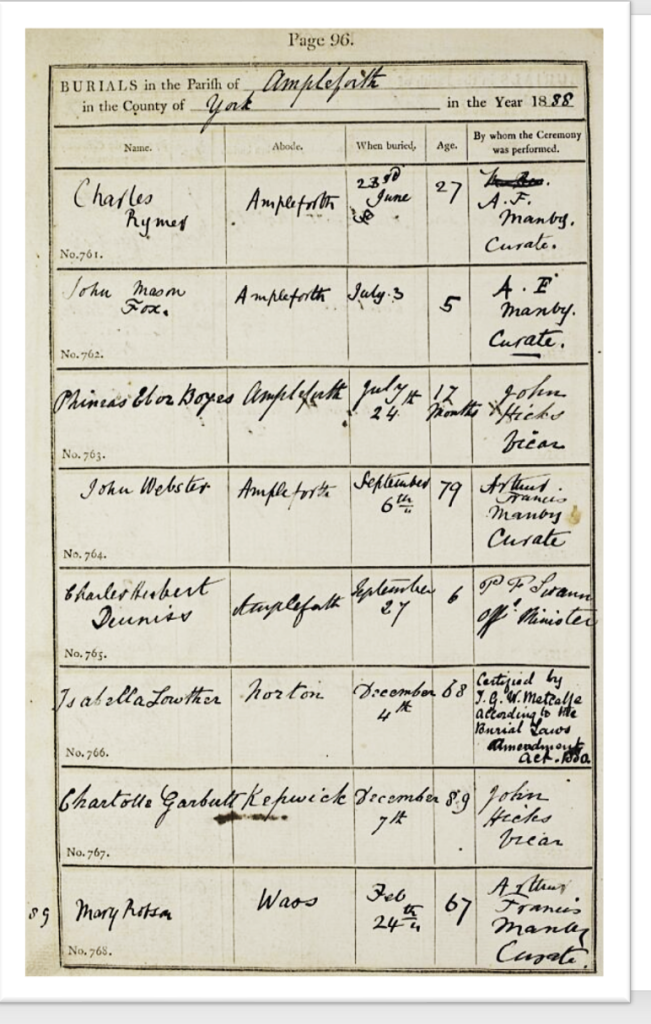
Since there was a lack of legal protections in place during the late 19th and early 20th centuries regarding cemeteries, especially for African Americans and other vulnerable communities, some officials and developers chose to ignore or conceal cemetery information in order to make a sale for developing prime land.
Once laws were enacted to protect cemeteries and those buried there, it was the city or county’s responsibility to have the bodies removed and relocated to another burial ground before the high-end land was sold for development. But unfortunately, that was not always the case. It depended on the integrity of the company that agreed to do the relocation, which, at times, could be questionable.
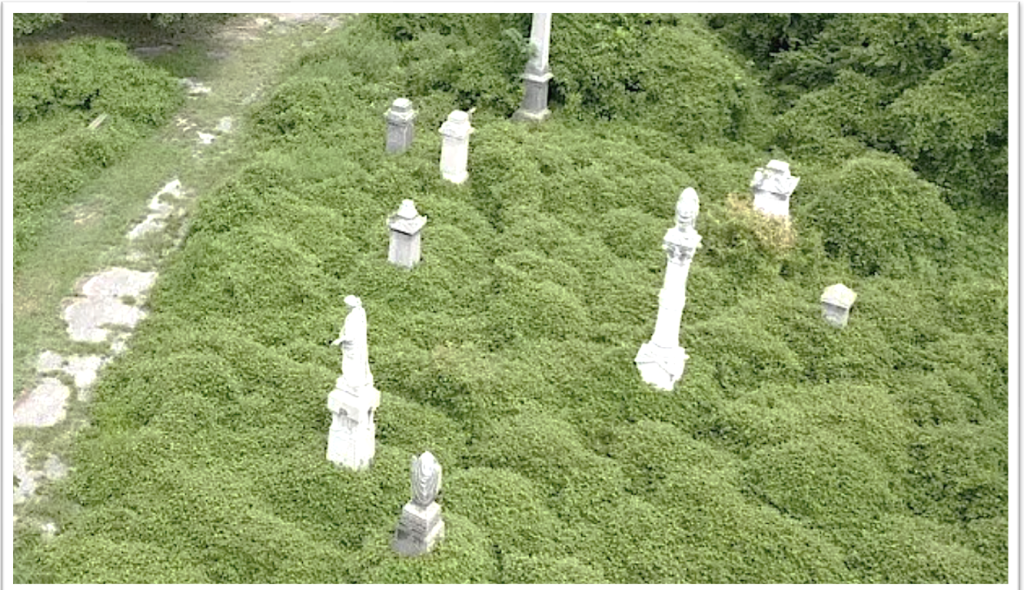
Hundreds of community cemeteries have been destroyed and paved over because those in power could get away with it. Other older burial grounds might have been closed for “sanitation reasons”. Once closed, the city or county could then decide, after a period of time, to sell the land for another use.
Chicago, Illinois
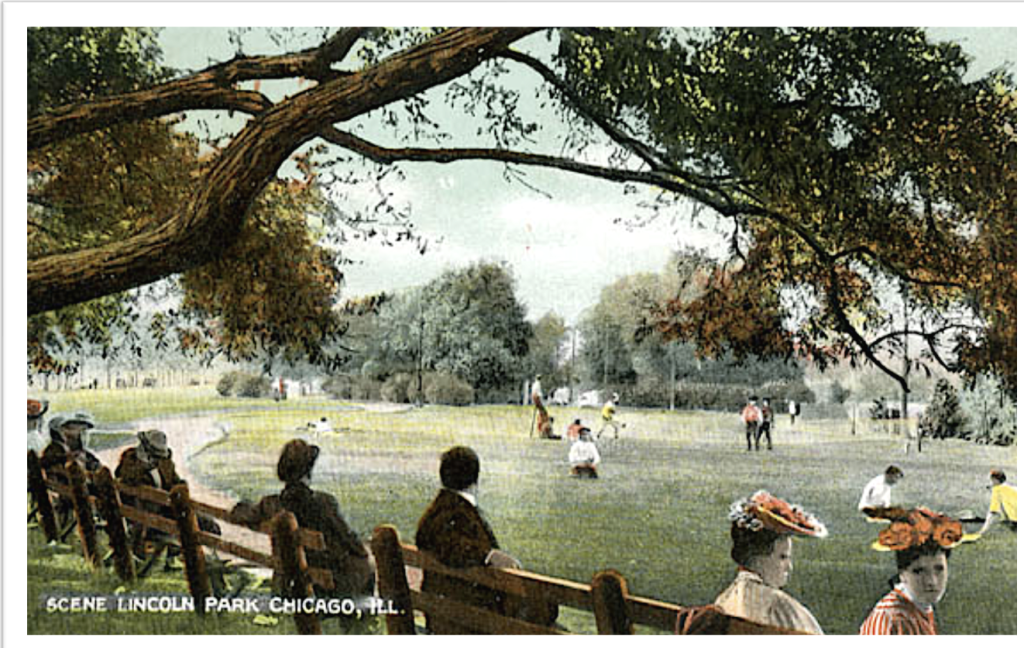
In Chicago, Lincoln Park was once the Chicago City Cemetery, a twelve-acre graveyard. Burials began in 1843 and continued through 1866. However, in 1865, the Illinois Supreme Court ruled that the land had been illegally acquired by the city. The city was given the option of paying the family who owned the twelve acres $75,000 ($1.5 million today) or returning the land to the heirs. The City of Chicago returned the land and ordered 1,635 bodies to be exhumed and relocated to other cemeteries. In 1869, the Lincoln Park Act gave control of the land to the Lincoln Park Commissioners (LPC), who were legally instructed how to convert the graveyard into a city park.
But in 1871, the Great Chicago Fire put an end to the grave removals. The City Cemetery was engulfed in the fire, and the stones and monuments were destroyed. By 1874, the LPC condemned the remaining 712 graves, which are still under the park. Only one monument remained to mark the parcel as a former cemetery.
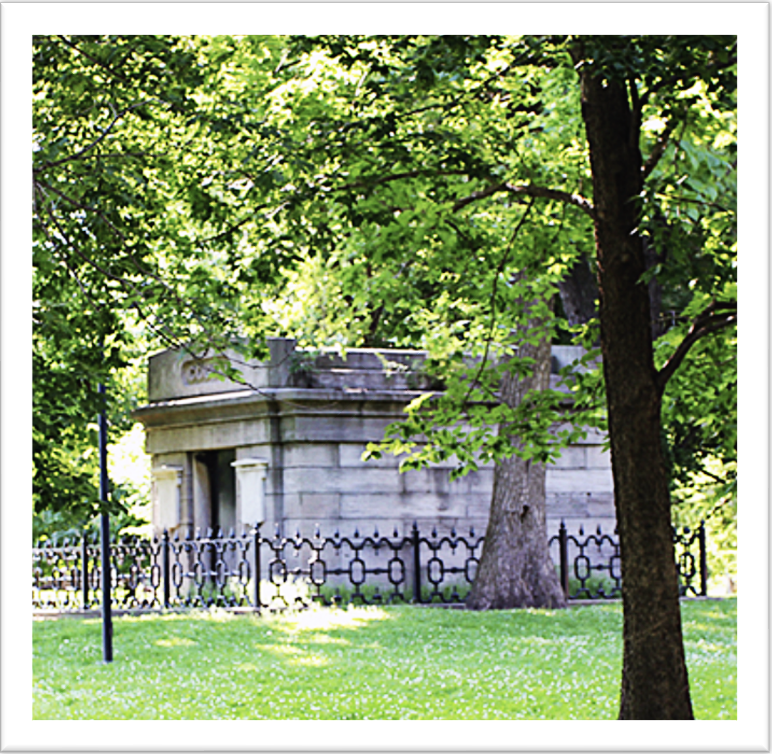
Built in 1858, the remaining 50-ton stone mausoleum, designed by John M. Van Osdel was for the Ira Couch family. Couch was a millionaire who owned the Tremont House (Hotel). In 1899, the LPC remarked, “…it would be impossible to remove the vault, except at great expense, and the Commissioners preferred to allow it to remain as an interesting reminder of the Park’s origin.”
Today, Lincoln Park is a vibrant neighborhood in Chicago. But there are some estimates that more than five thousand bodies remain under Lincoln Park’s beautiful lawns.
Richmond, Virginia
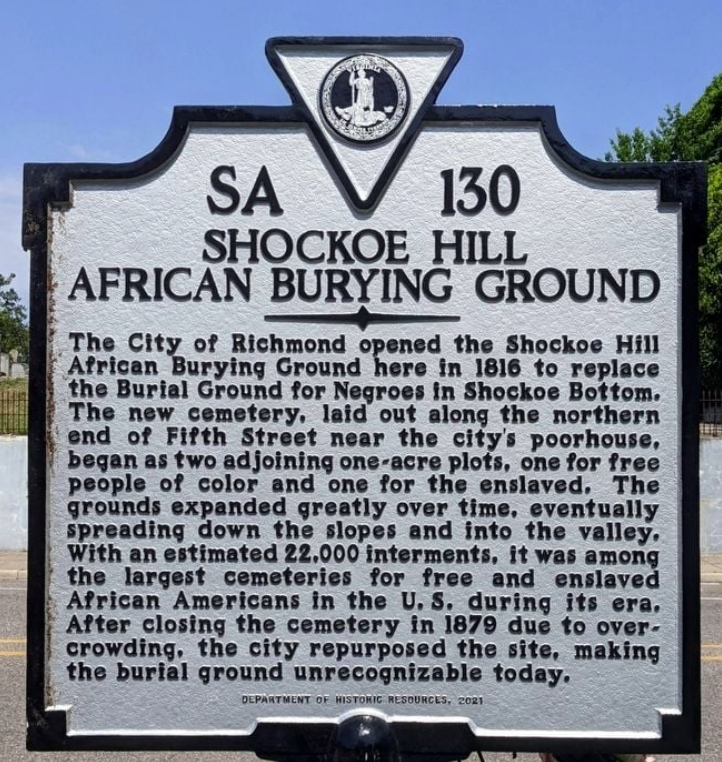
African American burial grounds have been uncovered in several U.S. cities during modern construction projects. Some date back to colonial times and include graveyards for slaves and free Blacks. One of the largest was Shockoe Hill African Burying Ground in Richmond, Virginia. Founded in 1816, on the northern edge of town, it consisted of “one acre for the free people of color, and one for slaves in the city.” By the 1840s, the allotted two-acres was not sufficient for burials. The city council designated another fourteen acres: five to be used for current burials, and the remainder to be enclosed with a fence for future use. After the Civil War, the cemetery became known as the local “Potter’s Field” where the poor, destitute, and unknown were laid to rest.

In 1879, the city council stopped all burials and repurposed the cemetery grounds in order to extend the city streets. Although human bones were unearthed and coffins were discovered during construction, it did not stop the upheaval of the former cemetery.
By the 1950s, the Richmond City Accessors office approved the ground for a business, and by 1959, the cemetery was rezoned for industrial use. A gas station was located on a section of the graveyard in 1960.

It is estimated that more than 22,000 burials of freed and enslaved African Americans took place here before the graveyard was abandoned and repurposed by the city.
In 2020, the Richmond City Council approved an ordinance for the city to repurchase an acre of the grounds that contributed to the original boundaries. The cemetery was listed on the Virginia Landmarks Register and the National Register in 2022.
Today, a proposed memorial is being considered for the site, and archaeological studies continue to locate those buried under the roadways and bridges.
Cincinnati, Ohio
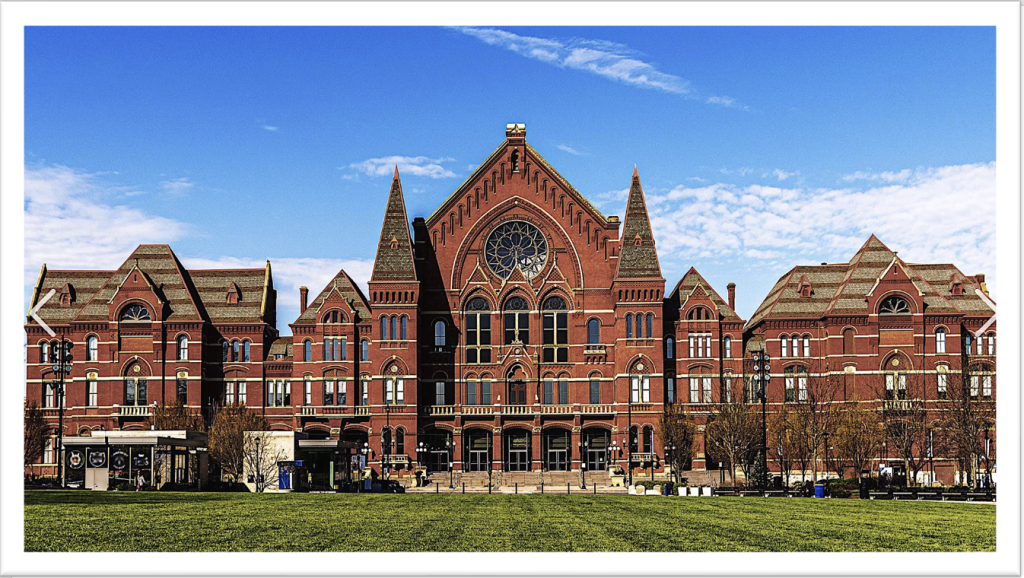
The Queen City has several old burial grounds that have been sold to create parks, or for building construction. One such recent cemetery discovery occurred at Cincinnati Music Hall, where a Potter’s Field had been located. The Music Hall was constructed in 1878, but not all of the remains were removed before construction. An estimated 10,000 graves remain beneath the historic building. No wonder Music Hall is said to be one of the most haunted sites in the country.

Cemetery parks include Washington Park, constructed nearly two cemeteries ago, over two church burial grounds: one for Episcopalians and the other for Presbyterians. It is also rumored that many children from the Cincinnati Orphanage Asylum were buried here.
Rapid Run Park is another location that was once a 26-acre Potter’s Field, possibly the largest in the city, with up to 20,000 burials between 1852 and 1981.
Cincinnati has several African American graveyards that have disappeared over time, including the early 19th century West-end African American Burial Grounds, also known as the Catherine Street Burying Grounds.
Tampa Bay, Florida
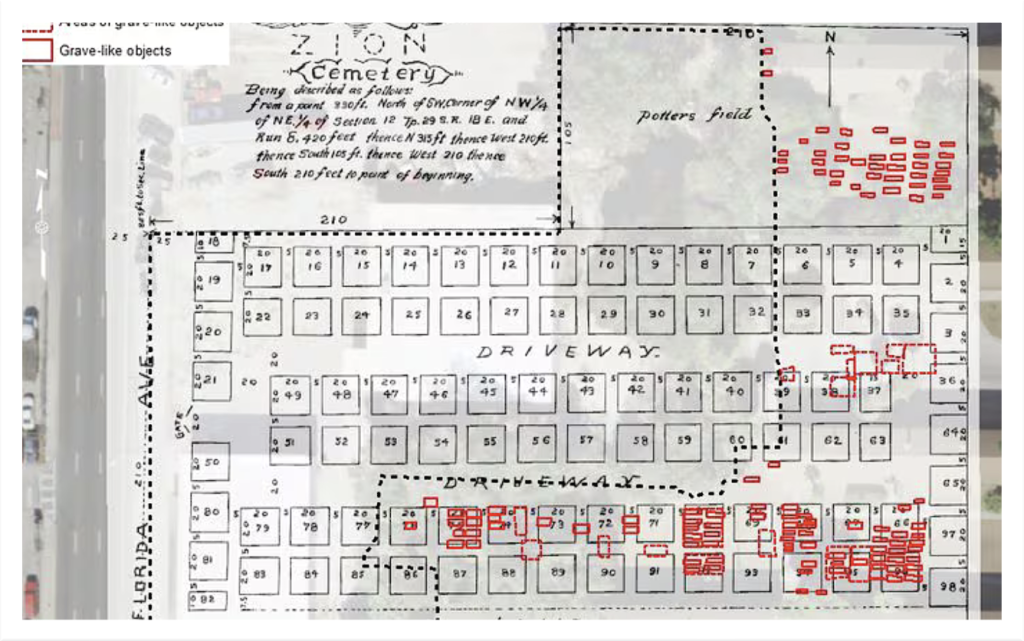
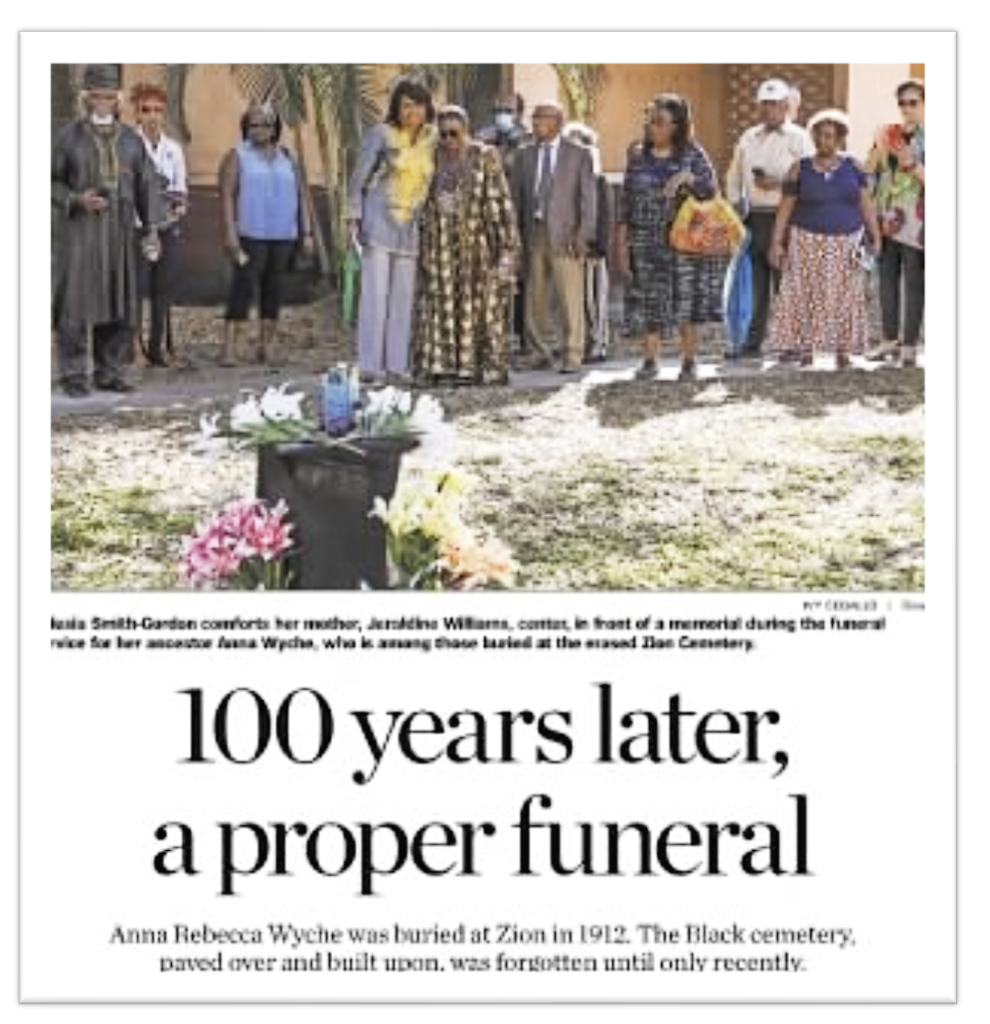
Tampa Bay has several “disappeared” cemeteries located under housing complexes, parking lots, and warehouses. Most are historic Black graveyards. The largest was Zion Cemetery, Tampa’s first African American cemetery, discovered under a public housing complex in 2019. Ground penetrating radar (GPR) has found more than 200 graves. Today, Robles Park Village housing is located here.
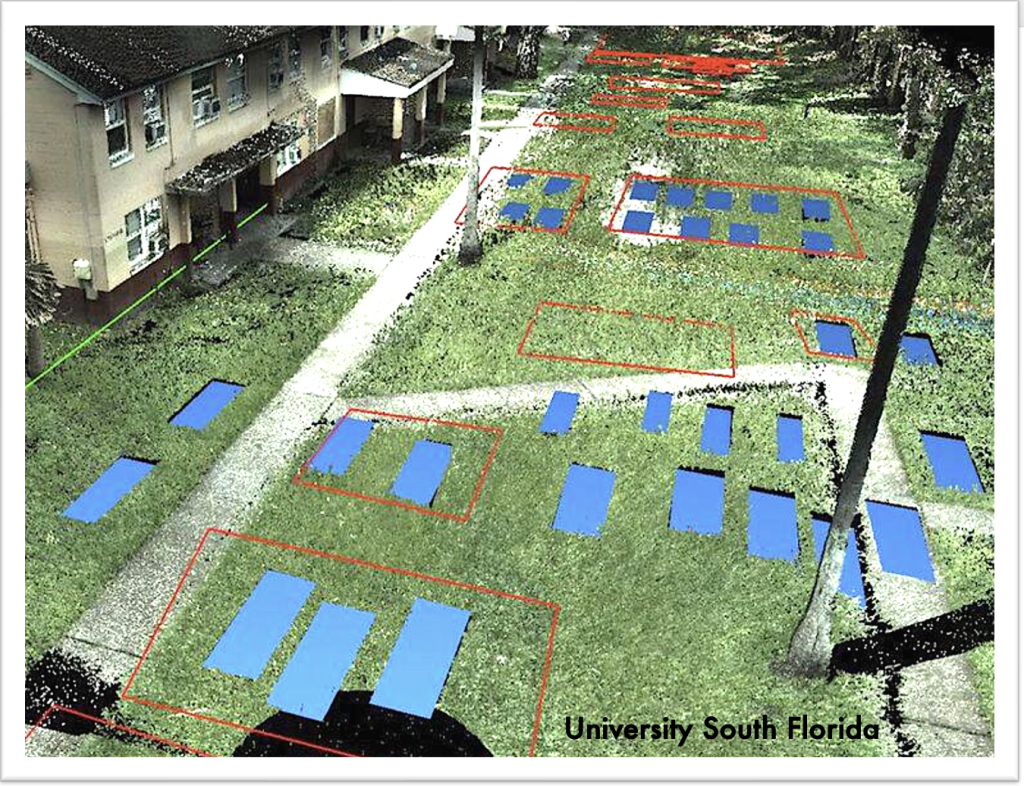
Another cemetery was once located in Clearview Heights. It was the burial grounds for the St. Matthews Missionary Baptist Church, founded in 1909. When the church could not afford to keep the land in 1955, an agreement was made to sell the building and cemetery, and relocate the graves to another burial site. At least 70 graves have been discovered on only a fifth of the two-and-a-half acres of land. More bodies remain undetected under a parking lot and part of a building. The search continues.
At least another eight to ten African American cemeteries have vanished in the city. Archeologists using GPR continue the search for each of them.
Patoka Lake, Indiana
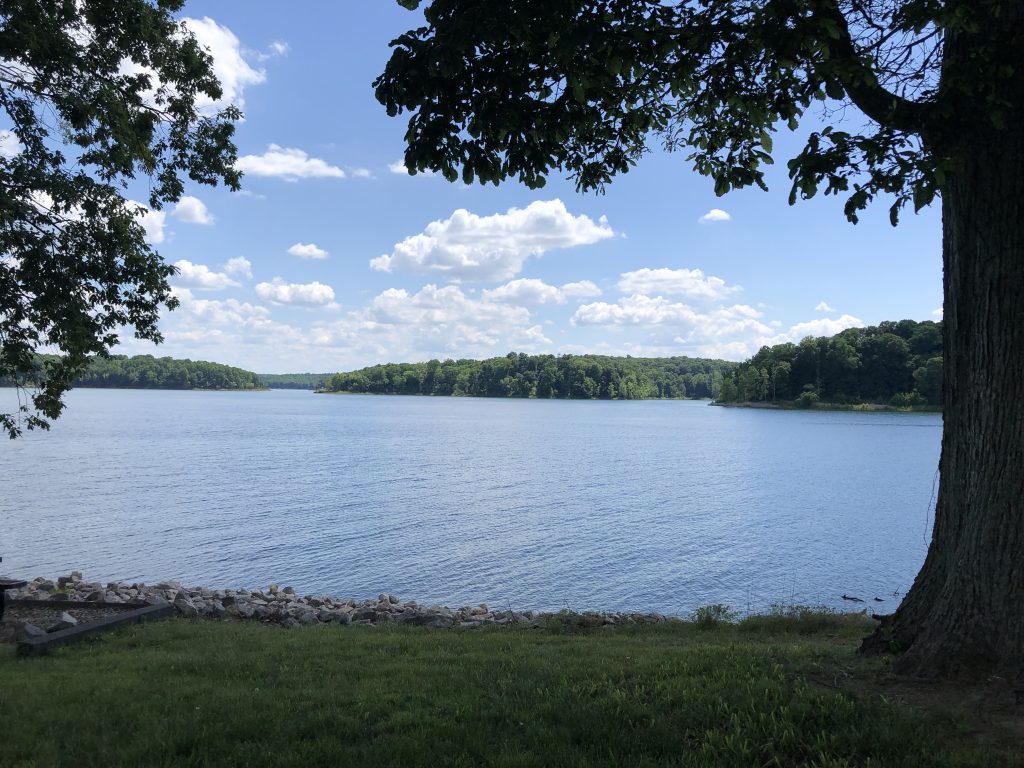
This incident involves two dozen small community cemeteries in Southern Indiana. In 1965, the US Army Corps of Engineers and the Indiana Department of Natural Resources decided to construct an 8,800-acre lake, the second largest in Indiana. Construction began in 1972 and was completed in 1978.
During that time, 24 cemeteries were discovered within the future basin of the man-made lake. Most were moved to a site now known as the Patoka Memorial Cemetery, located along Highway 37.
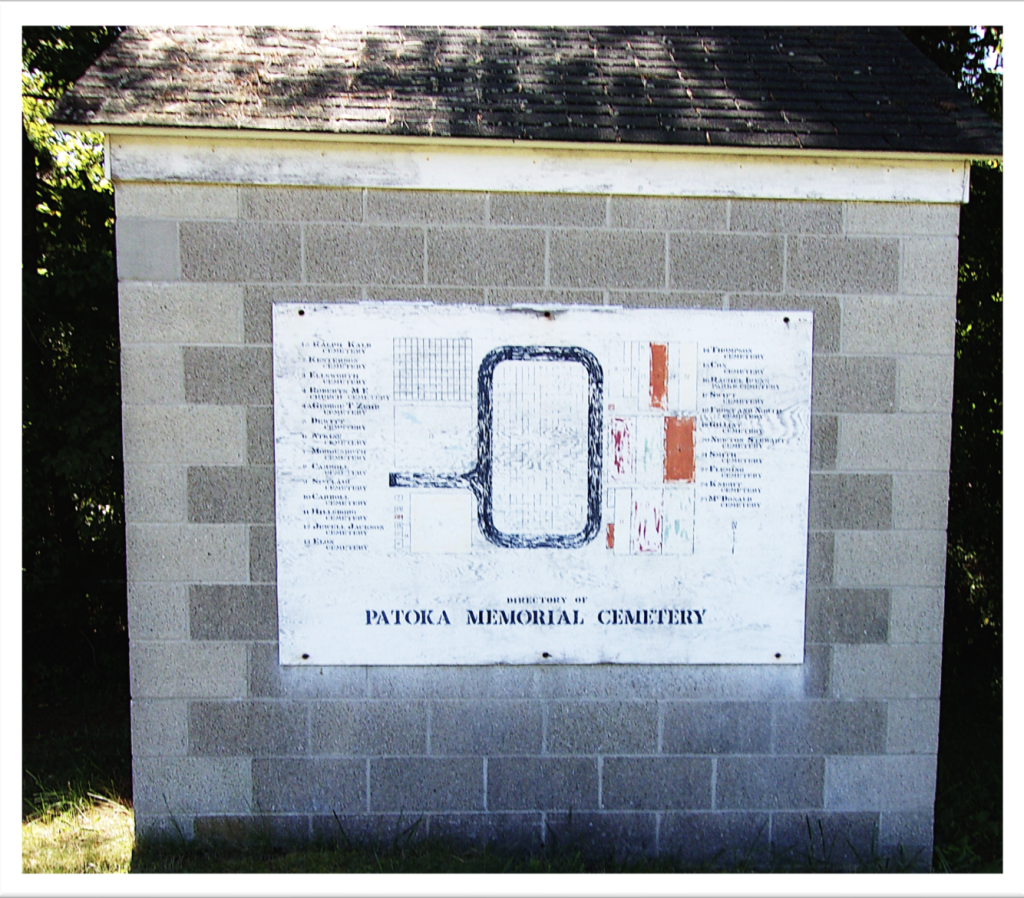
A few of the cemeteries whose graves were reported to have been moved included Atkins Cemetery, Carroll Cemetery, Cox Cemetery, DeWitt Cemetery, Ellsworth Cemetery, and Fleming Cemetery. Numerous others included small pioneer or family cemeteries dating to the 1800s. The State of Indiana attempted to have all graves exhumed and relocated, but those who worked on the project admitted there was not enough time to get all the remains relocated before the basin was filled with water. Divers visit the lake today to search for the remains of underwater towns, buildings, and grave stones.
The next time you learn about a city with a “disappeared” burial ground, remember what it’s revealing: whose stories were valued, and whose were easily pushed aside. Cemeteries have long been shaped by those with political influence, economic power, and the authority to “redefine,” or erase, the histories of entire communities, including African Americans, Indigenous people, poor and rural families. But every grave marker represents a life, and that fact should always guide anyone in control of the decision-making process over these sacred places.
Joy