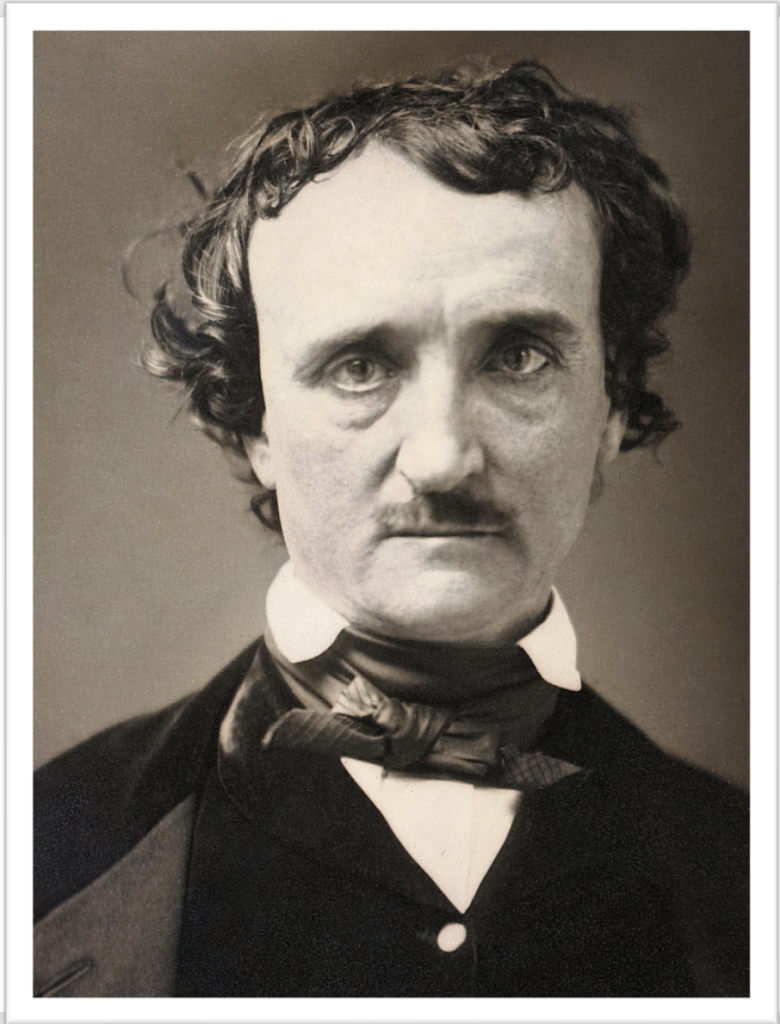
Most famous for his macabre tales of mystery and loss, Edgar Allan Poe authored nearly seventy short stories during his life. Poe became best known for writing Gothic Horror, although he did write mysteries, adventure, and dark comedies.
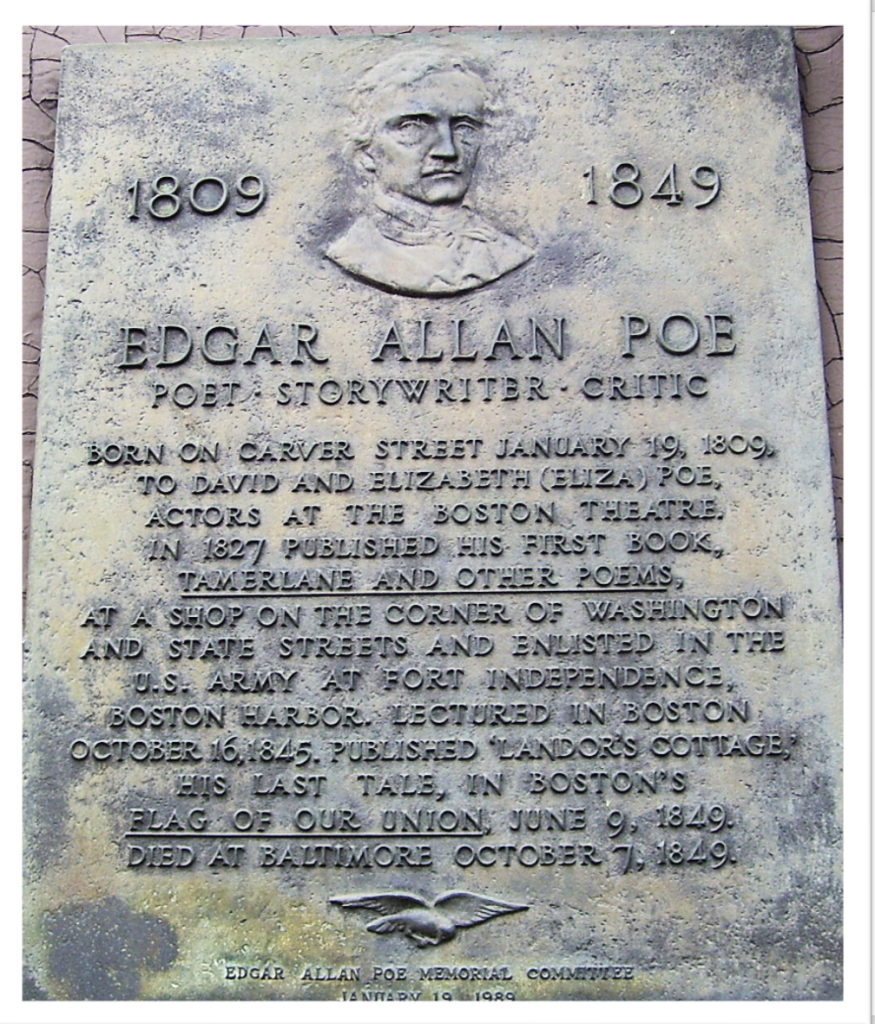
Born in Boston on January 19, 1809, Poe’s life followed neatly in the American Gothic form he became famous for. His parents were both gone from his life by the time he was two. He was taken in and raised by John and Frances (Fanny) Allan, who named him Edgar Allan Poe. Growing up in Richmond, Virginia, Poe learned stability at the Allan home with Fanny providing him with love and affection, while John was more of a taciturn man, who did not approve of Poe’s gambling and disregard for money, or his ambition to be a writer.

Poe met his first love, fifteen-year-old Sarah Elmira Royster, in 1825. Her father did not approve of Poe. When he left to attend the University of Virginia in February 1826, Elmira waited for him. But unbeknownst to her, Royster’s father had Poe’s letters intercepted. With no contact from Poe for nearly two years, Elmira married 18-year-old Alexander B. Shelton in December 1828, who became wildly successful in the transportation industry. It was said that many of the poems published in Poe’s first work, Tamerlane and Other Poems (1827), were inspired by Royster.

For Poe, college was not working out, so at the age of 18, he enlisted in the U.S. Army to escape John Allan’s derision. He and Allan attempted a reconciliation after Fanny Allan’s death, but it was short and ineffectual. Poe then received an appointment to the West Point Military Academy, where he lasted three years before being expelled. By the time of John Allan’s death in 1834, Poe had been written out of his will.
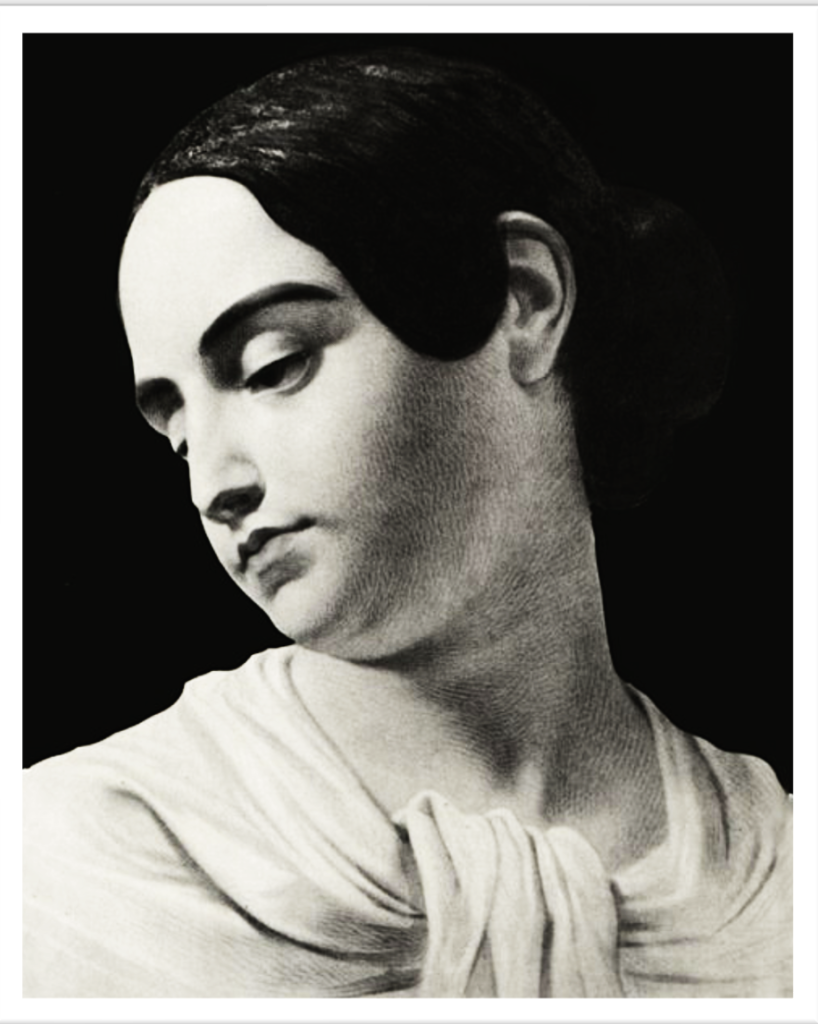
He began working for periodicals and literary journals, traveling to the larger cities of Baltimore, New York, and Philadelphia. During the mid-to-late 1830s, Poe was able to make a living as an editor and author. In 1836, he married his 13-year-old cousin, Virginia Eliza Clemm. Poe was twenty-seven. For the next thirteen years, Poe, Virginia, and her mother, Maria, moved several times to advance Poe’s career. Virginia offered Poe the emotional dependability he craved while his mother-in-law, Maria, provided a stable home life for the three of them.
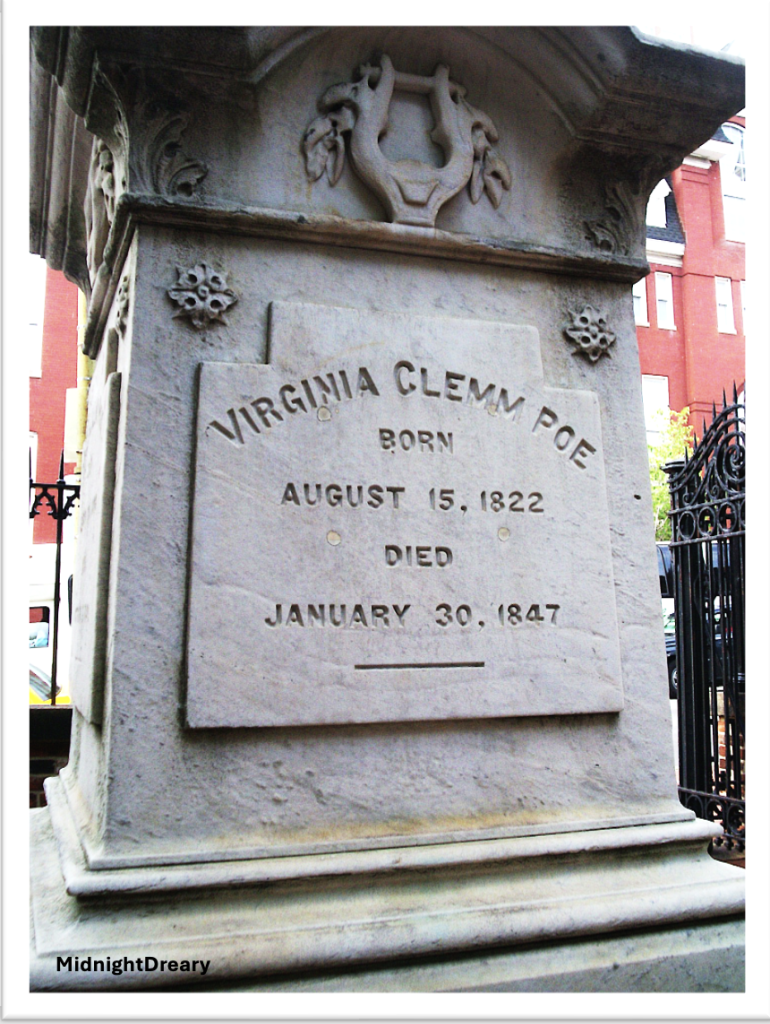
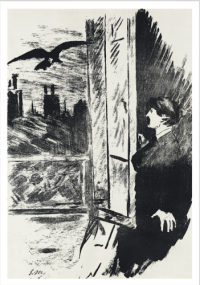
In early 1842, Virginia showed the first symptoms of tuberculosis. She died five years later, on January 30, 1847, at Fordham cottage in New York. The disease is slow and unpredictable, and that fragility of life echoes through Poe’s writings of the time: “The Masque of the Red Death,” “The Tell-Tale Heart,” “Lenore,” “The Premature Burial,” “The Raven,” and “The Purloined Letter,” to name only a few. It was during this time that Poe’s writing became engulfed in death, more mournful yet more lyrical.

After her death, Poe became emotionally unstable, displaying erratic behavior and continued drinking. When he returned to Richmond in 1848, he took up again with his teenage sweetheart, Sarah Elmira (Royster) Shelton, whose husband had died a few years earlier. Elmira was now a wealthy widow with two children who did not approve of Poe. The two talked of marriage. A date was never set, but there were indications that an “understanding” had been reached.
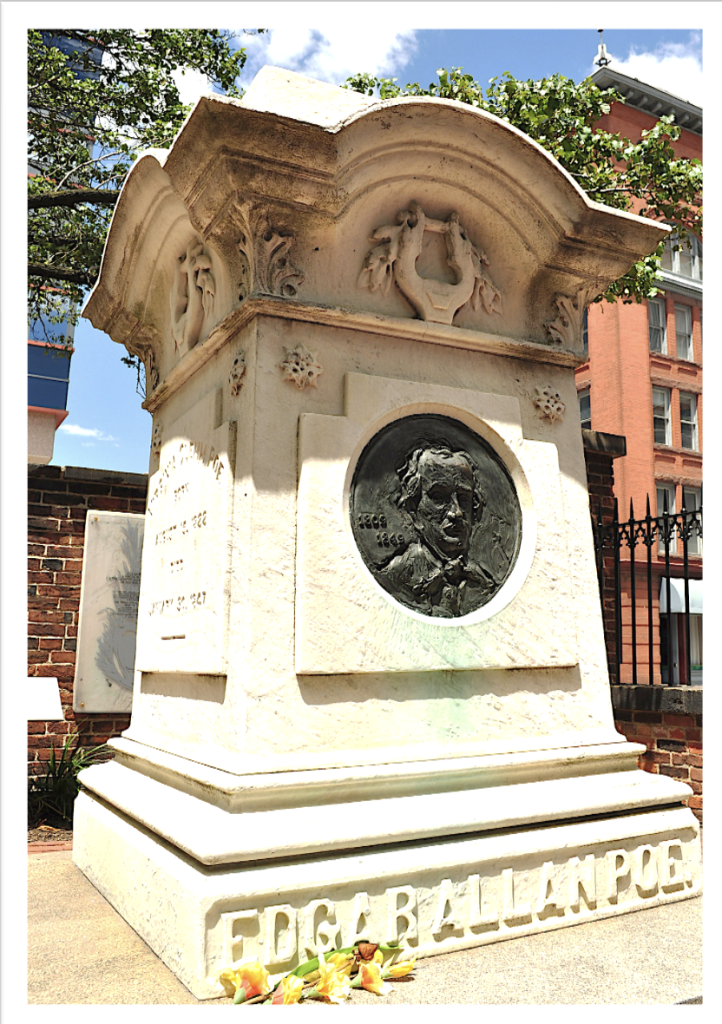
Poe left Richmond on September 27, 1849. Two weeks later, on October 3, he was found semiconscious on the streets of Baltimore. He was taken to a medical college where he died on October 7. His cause of death was referred to as “congestion of the brain,” or “cerebral inflammation.” Both were euphemisms for alcoholism. Regardless, Edgar Allan Poe died under “mysterious circumstances.”
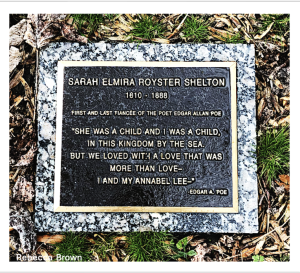
When Sarah Elmira Royster Shelton died in 1888, she was buried at Shockoe Hill Cemetery, Richmond, Virginia. Her obituary was printed in the Richmond paper and titled, “Poe’s First and Last Love.” Her stone was engraved with lines from Poe’s poem, “Annabell Lee.”
Joy