
 |
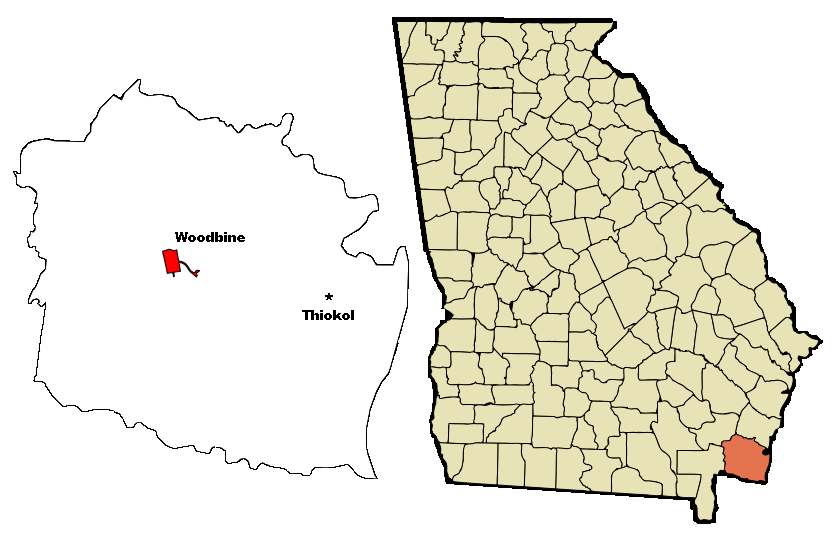
| Location of Woodbine, Georgia |
Woodbine, Georgia was selected as the place to build the Thiokol
Chemical Corporation in the mid-sixties, thanks to its close proximity to Cape
Canaveral where the space race was in full orbit. Situated on 7,400 acres, the company
built and tested solid propellant rocker motors for NASA. The plant was
comprised on 36 buildings that housed all types of fuels and chemicals produced here.
Chemical Corporation in the mid-sixties, thanks to its close proximity to Cape
Canaveral where the space race was in full orbit. Situated on 7,400 acres, the company
built and tested solid propellant rocker motors for NASA. The plant was
comprised on 36 buildings that housed all types of fuels and chemicals produced here.
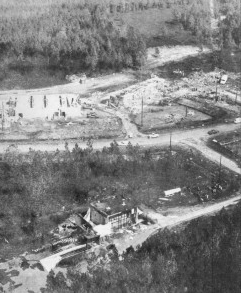 |
| Devastation From Explosion |
On Wednesday morning, February 3, 1971, one of those
buildings known as the Woodbine Plant (Building M-132) exploded killing 29 and
injuring close to 50 workers, most of them women. According to reports, the fire began in an area where ignition
chemicals were added to other explosives including magnesium. The fire then spread
to a storage area that contained 56,000 flares. The resulting blast leveled
the building, killing 24. Officials were not sure of the immediate death toll
due to victims being dismembered from the explosion, and bodies being blown
from the building into a nearby forest.
 |
| Building Destroyed |
Three more buildings were heavily damaged and more than
50 workers were injured, five so severely, they died within days from their injuries. Nearby
buildings sustained scorched and buckled aluminum walls, and charred
utility poles. Another seven buildings
received minor damage from the blast. One survivor said it was “like an atomic
bomb” had gone off. Heavy smoke and dangerous fumes lay over the plant as a dismal rain began to fall on the wreckage.
50 workers were injured, five so severely, they died within days from their injuries. Nearby
buildings sustained scorched and buckled aluminum walls, and charred
utility poles. Another seven buildings
received minor damage from the blast. One survivor said it was “like an atomic
bomb” had gone off. Heavy smoke and dangerous fumes lay over the plant as a dismal rain began to fall on the wreckage.
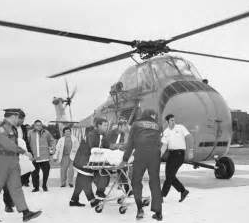 |
| Air Lifting Victims |
At the time of the tragedy, the plant had an order to produce
758,000 trip flares for the Army’s use in Vietnam. The materials were originally
given a Class 7 designation – the highest ranking for hazardous chemicals and
materials. But in 1967, the Army had
downgraded the classification to a Class 2 – which designated a fire hazard.
The Army reissued the Class 7 designation in the fall of 1970. It reached the
Thiokol Plant on February 25 … 22 days after 29 people lost their lives in the devastating explosion.
758,000 trip flares for the Army’s use in Vietnam. The materials were originally
given a Class 7 designation – the highest ranking for hazardous chemicals and
materials. But in 1967, the Army had
downgraded the classification to a Class 2 – which designated a fire hazard.
The Army reissued the Class 7 designation in the fall of 1970. It reached the
Thiokol Plant on February 25 … 22 days after 29 people lost their lives in the devastating explosion.
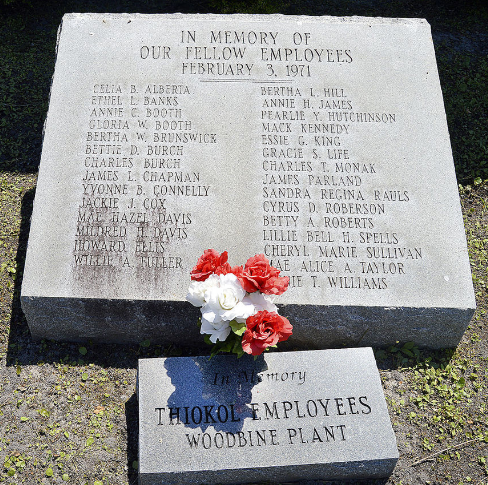 Today, children of survivors are working to develop the Thiokol Memorial and Museum to honor those killed and injured in the incident – most who
were women. Thiokol was one of the few places in the late 60s and early 70s
where a woman could get a full time job and be paid the same wages as a man.
Due to the Army contract, the plant’s workforce at the time of the blast was close to 500 employees working round-the-clock to get the
order filled.
Tomorrow, February 3, is the anniversary of the explosion. A memorial
service will be held to honor those who died and were injured 47 years ago.
service will be held to honor those who died and were injured 47 years ago.
~ Joy