

Celestial beings are believed to be divine, retain great wisdom, and are associated with the heavens.
In Greek mythology, these entities were gods and goddesses; divine messengers between earth and heaven.
And in various religions, there are choirs or levels of angels.
Choirs of Angels
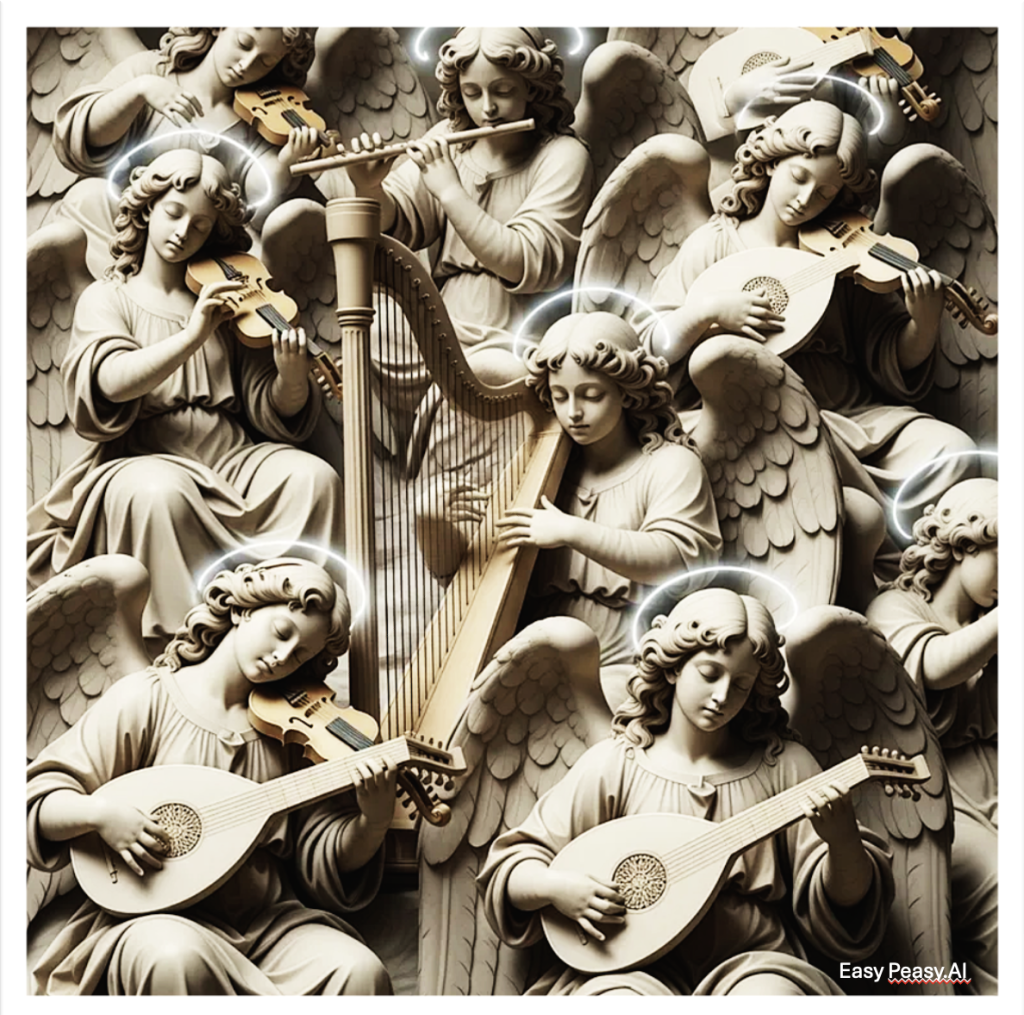
The upper or divine choir is made up of Seraphims, Cherubims, and Ophanims, which exist only in Heaven: Seraphim are the highest order of winged celestial beings. This is the divine choir that surrounds the throne of God. Seraphim have six wings; two for flying, two for covering their faces, and two for concealing their feet.
The second-highest order of angels are Cherubs. They are human in appearance with double wings to symbolize God’s power.
Ophanim are wheel or sphere-shaped celestial beings that never sleep. These entities ceaselessly guard the throne of God.
The middle deck is composed of Dominions, Virtues, and Powers.
But our interest today is the lower choir, which includes Principalities, Archangels, and Angels.
Archangels and Angels
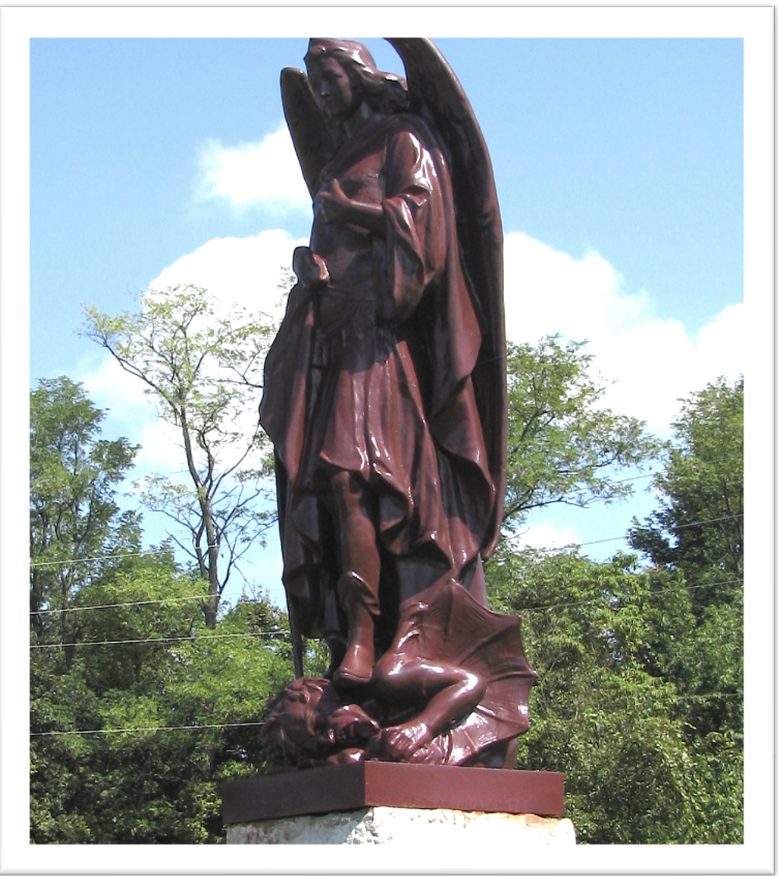
There are seven archangels, but only three interact with humans. These include Michael, Gabriel, Raphael. All are directly connected to God. Archangels are the messengers sent to humans at critical times.
Michael is usually depicted in a warrior’s tunic and defensive shield, holding a sword of divine justice as he fights against evil. He represents the champion of truth. A dragon or serpent may be found underfoot to show victory over evil.
Raphael is the angel of healing, both physically and spiritually. He is the patron of physicians, nurses, and travelers, and the protector of those facing danger, illness, or uncertainty. Raphael is depicted with a staff, a traveling cloak, or with an extended hand to offer healing and comfort.
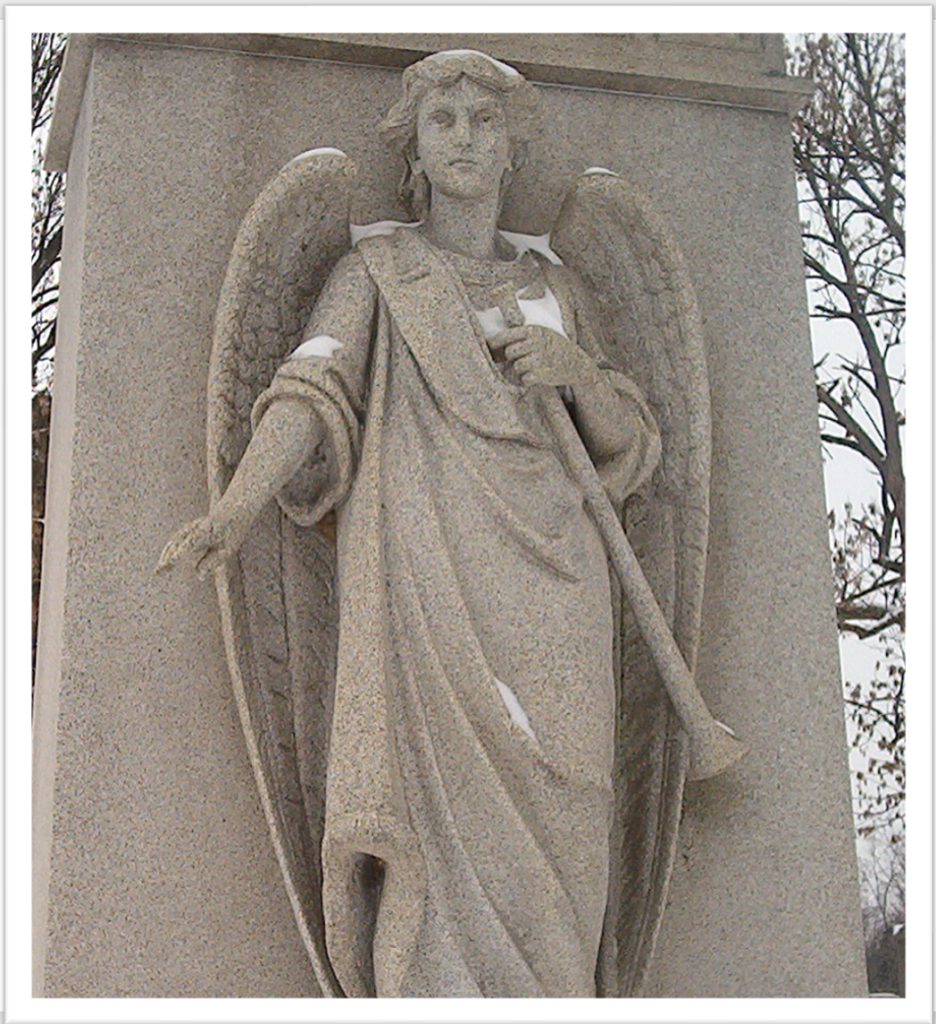
Gabriel is the archangel of messages and divine communications. His symbols include the trumpet to announce Judgement Day, and a scroll or book to record divine messages. Gabriel is shown in mid-step to convey urgency and swiftness. His statue offers hope in the resurrection.
But there are also malevolent archangels: fallen angels who were removed from heaven for an offense against God.
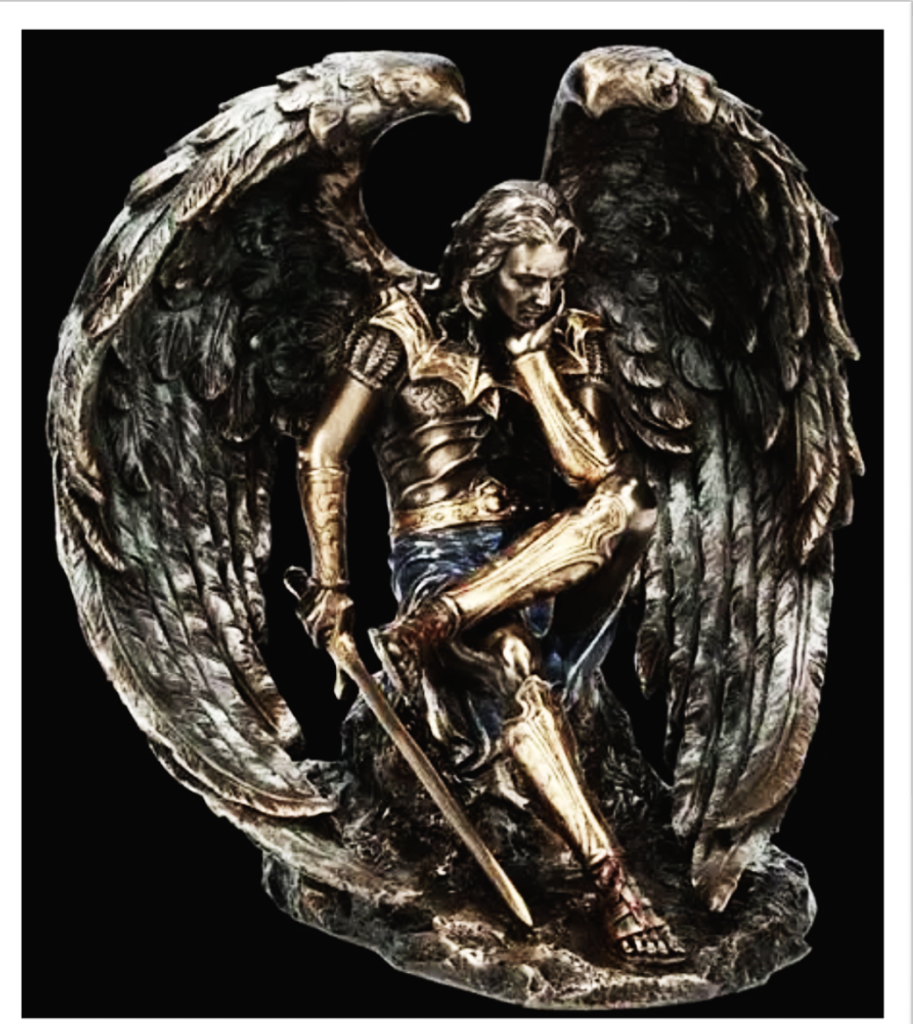
These include Lucifer, known as the Light Bearer or Morning Star, and considered God’s favorite until his pride and defiance caused him to usurp divine authority. This resulted in him being cast out. Symbols include a serpent that is cunning or tempting. Chains show his bindings after defeat, and a dark or extinguished flame indicates his removal as the light-bearer.
Iblis is the angel who refused to bow due to his arrogant pride. He is shown as the only figure standing among others who bow. He stands with crossed arms in a defiant pose, possibly at a threshold. Iblis is also known as the whisperer, offering temptation without the ability to compel.
Asmodeus is the demon of desire and disorder, not of love, but of obsession, lust, and jealousy. He has three heads: that of a ram, a man, and a bull, symbolizing lust, cunning, and brute strength. He may also have a serpent’s tail or a dragon’s body. Symbols in the cemetery include broken rings, fire, or a serpent.

Psychopomps are the spiritual guides that escort the living to the afterlife. Symbols include birds such as crows, owls, doves, and eagles. A psychopomp may travel with a walking stick, carry keys that fit hidden realms, or may be shown standing at gateways, carrying a torch or lantern. Valkyries and angels are often considered psychopomps. The fallen angel, Samael, along with Charon, are both psychopomps.
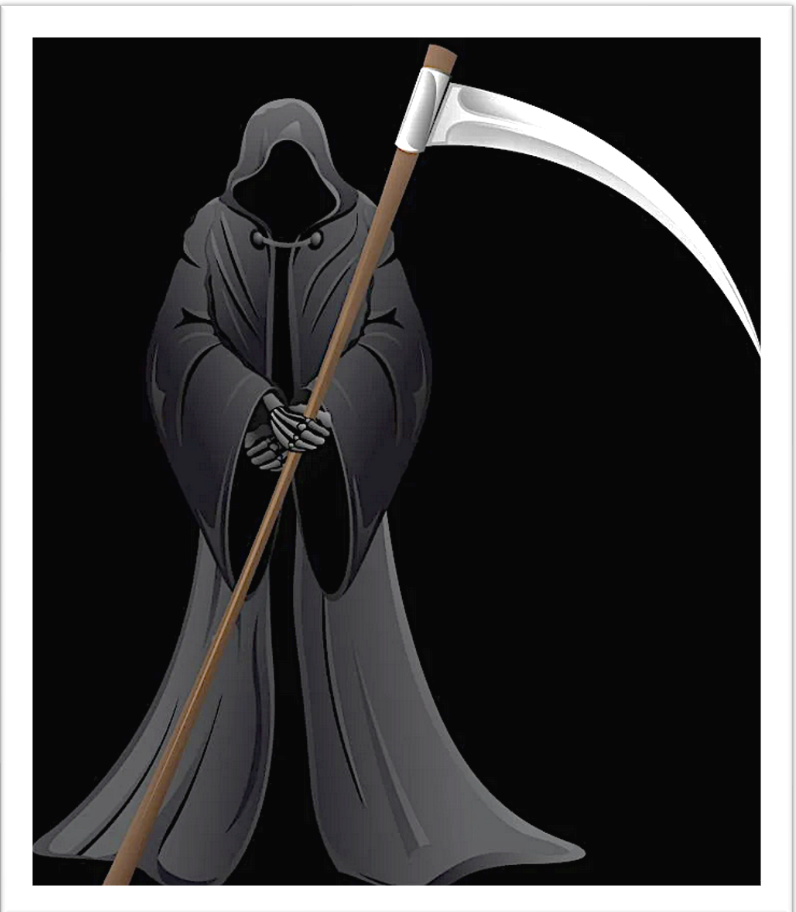
Samael is a fallen archangel who has become the Grim Reaper, an entity that harvests souls. He is not considered evil since his destructive actions can result in good works, such as destroying sinners. His symbols include the scales of Justice, or a scythe to “harvest souls.”
Charon is the ferryman, in Greek mythology, who leads souls across the River Styx. Cemetery symbols include a boat, coins, and an oar or pole. He may also be depicted as standing at a threshold.
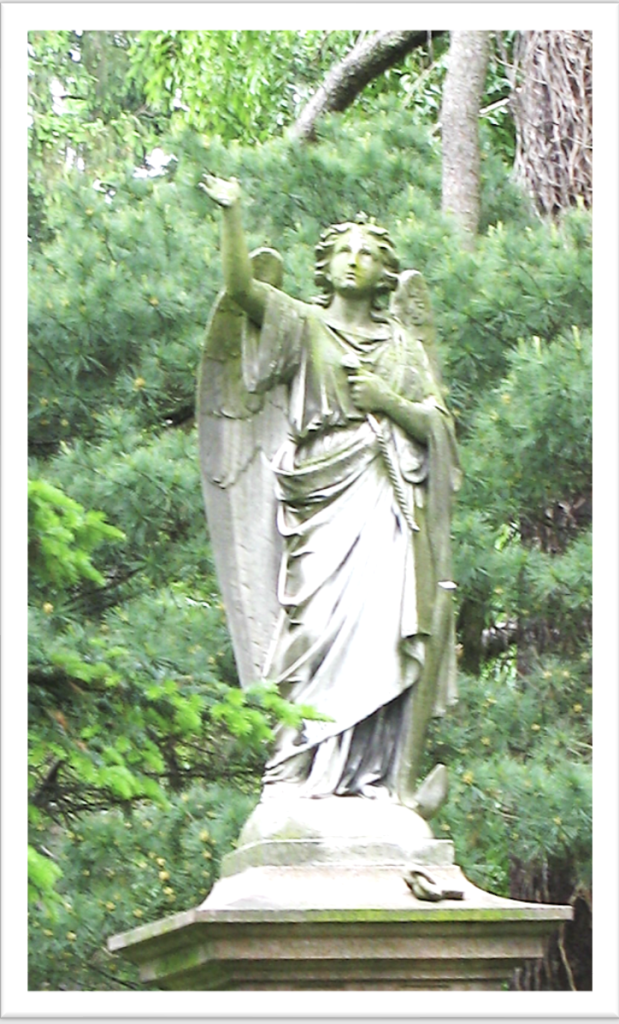
Of all celestial beings, angels are the closest divine entities to humans and the material world. They are seen as oracles and protectors, delivering prayers to God and bringing God’s answers back to humans. Although lowly in the level of choirs, angels have access to all other angels, regardless of hierarchy.
Cemetery Angels

In the cemetery, the main celestial statues are angels representing spiritual or supernatural beings. They act as protectors, messengers, and a guiding influence for humans.
Angel statues offer the most expressive faces of any in the cemetery.
Many angels in the cemetery are shown with a watchful gaze.
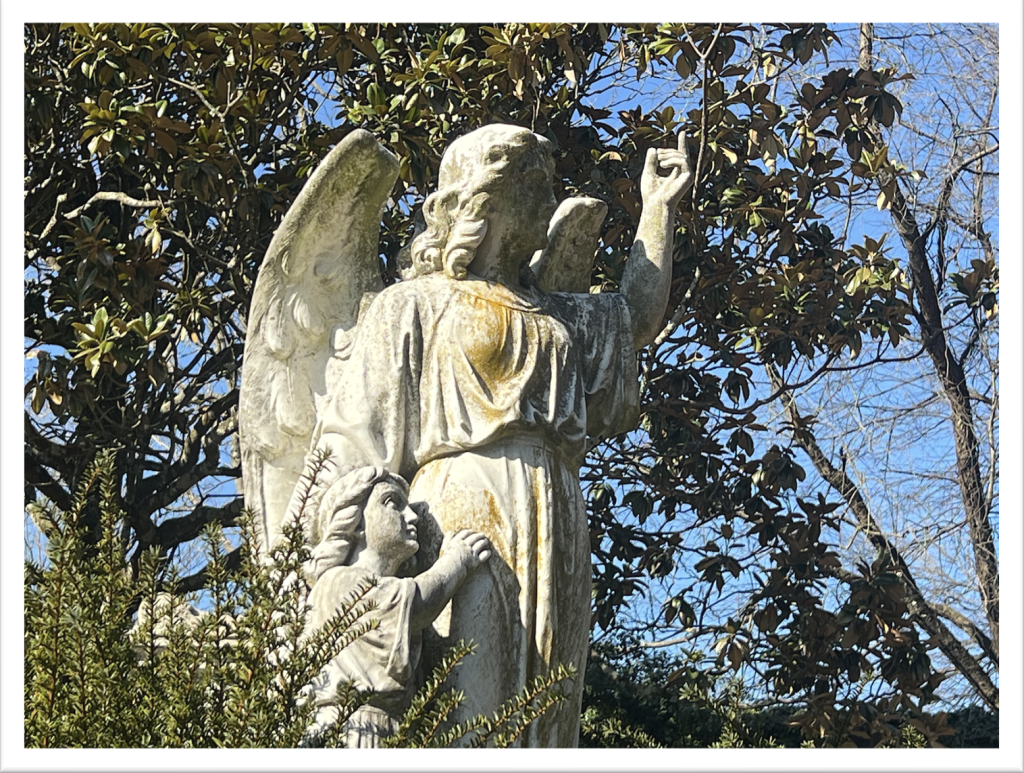
Winged angels fly to celebrate victory and rebirth, the soul’s ascent to heaven.
Angels also guide souls to the afterlife.
Those with trumpets stand ready to announce Judgement Day.
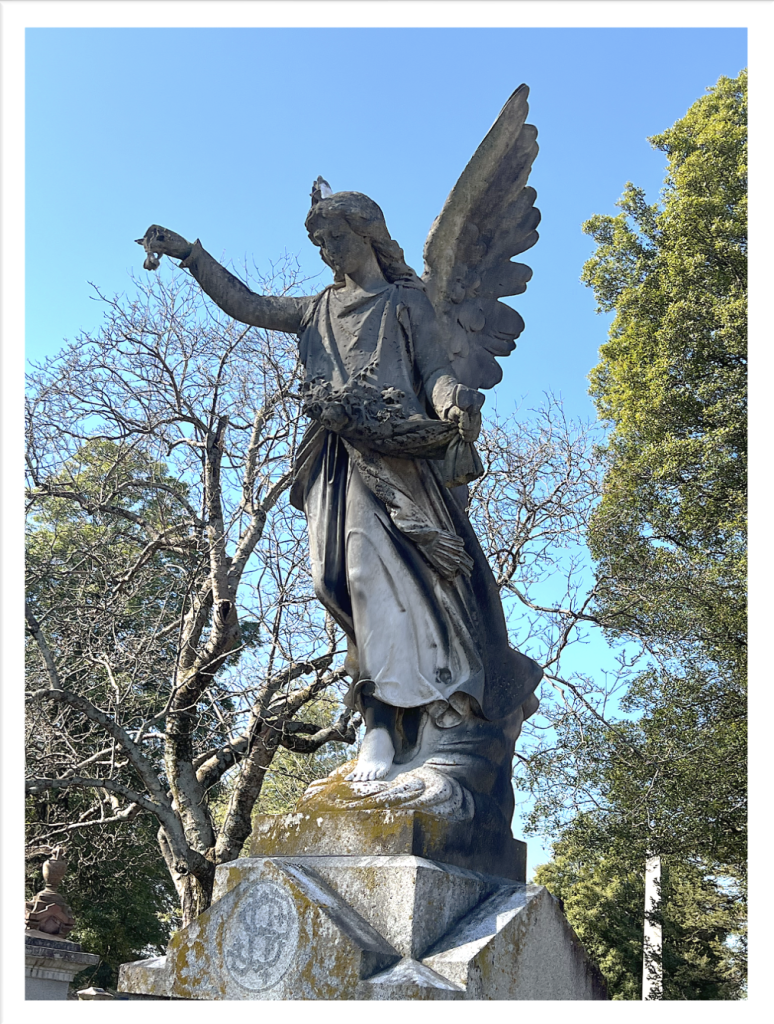
Angels are also depicted standing on pedestals offering protection.
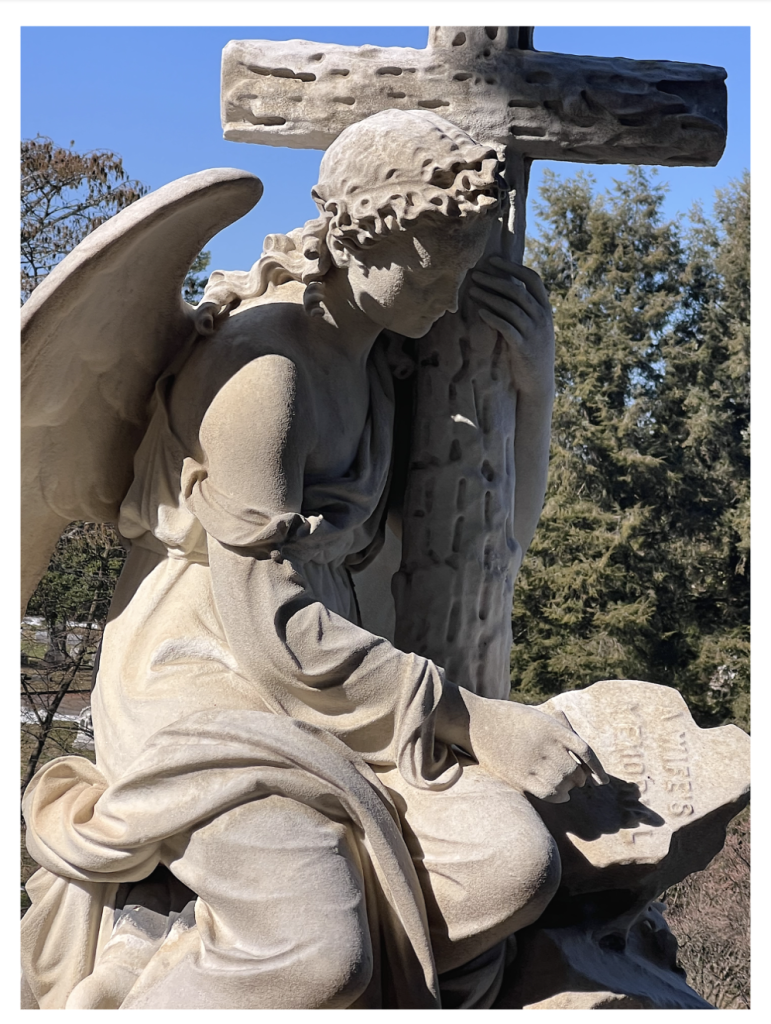
Or leaning on the cross in triumph over death.
Scattering the petals of life for protection.
Weeping angels express the grief and mourning experience of the living.
Other facial expressions offer comfort and hope to the living.
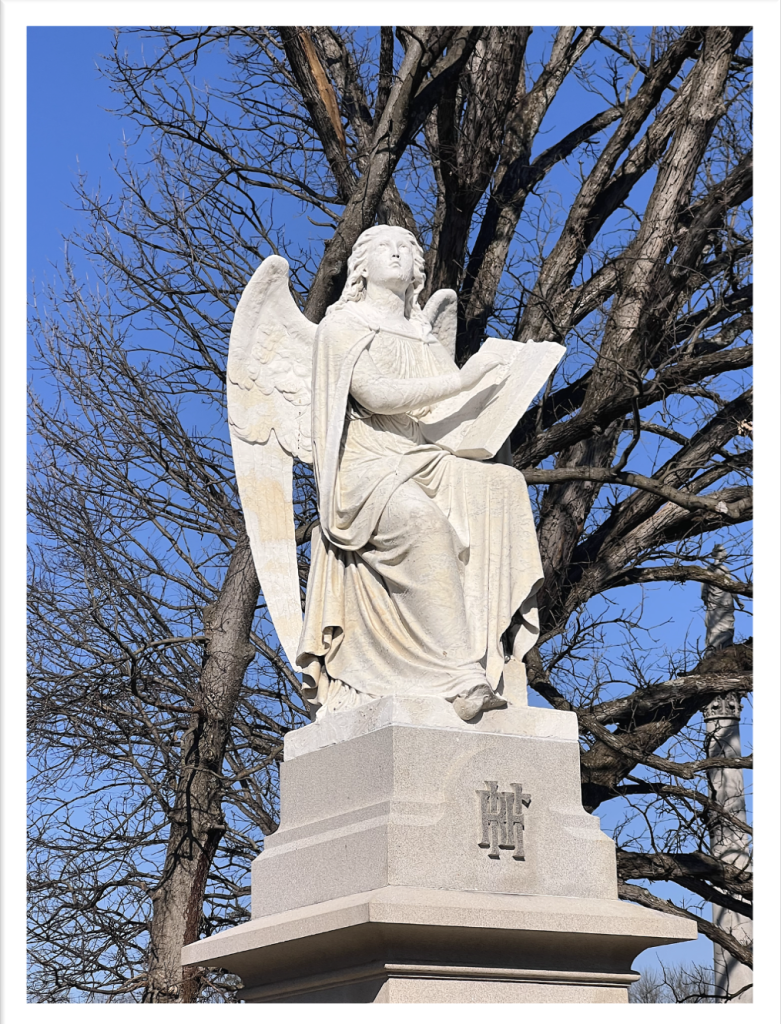
Recording angels are seen with scrolls or tablets where they have kept a record of the deeds of the living.
Cupid-type angels watch over the graves of infants and children, the innocent.
Symbolic Items
The objects an angel holds, or wears is also symbolic.
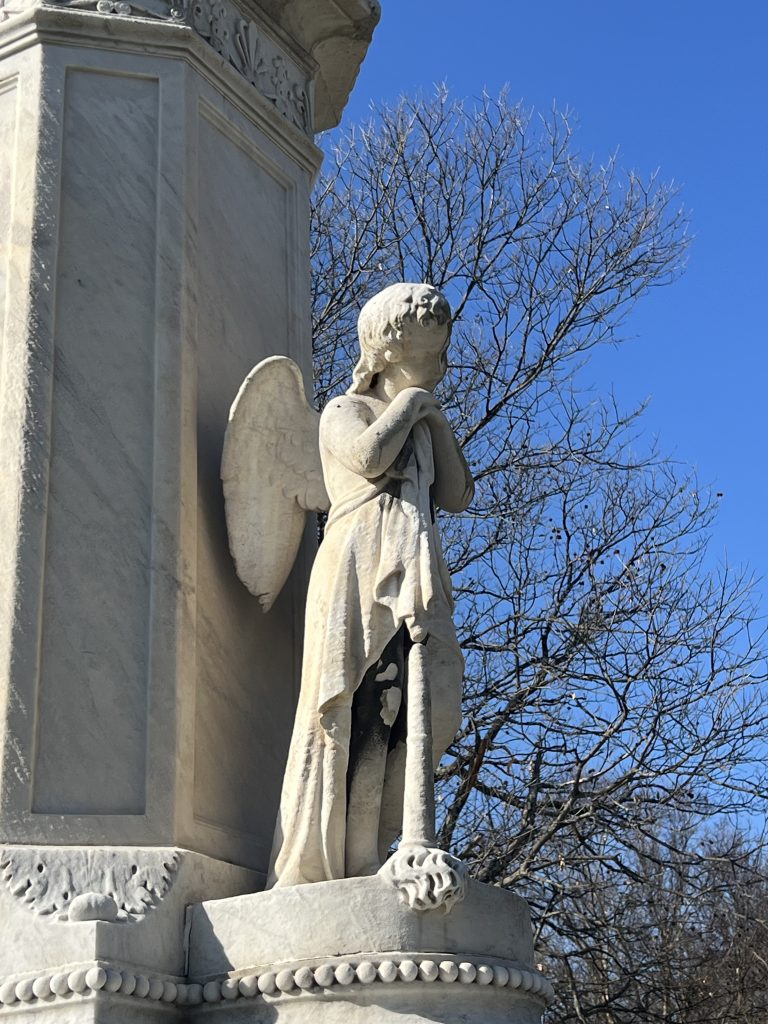
the torch of life
The cross conveys faith and salvation.
An inverted torch indicates that life has been extinguished.
Flowers suggest love and beauty, while scattering flower petals indicates that life is fleeting.
Books and scrolls are used to reveal that a record was kept of someone’s life.
A sword issues divine protection.
Worldwide, 75% of study respondents believe in angels, according to a 2024 global study on angels, and 36% claim to have had divine experiences.
In the U.S, 69% say they believe in angels. This belief resonates across religions and generations.
Even Pope John Paul II believed that angels play a part in salvation.
This could be why angels are the most popular and enduring forms of funerary art.
Next time you visit the cemetery, notice how many angels are there, creating quite a fitting tribute to the “Messengers of Man.”
Joy