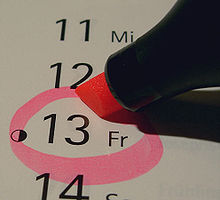
ushered in not only a new year – but also a year full of Friday the 13th’s
– three in all, the most any year can have! So what better time to take a look at the Graveyard Poets
and their fascination with death and melancholy than on a day filled with
mystery and dread?
 The
TheGraveyard Poets were a group of over a dozen Neo-classical poets who wrote from
the 1740’s to 1790’s. These
writers dwelled on mortality, religion and death, writing about coffins,
skulls, the solitude of death, bereavement, and man’s ‘despair of the human
condition,’ hoping to evoke feelings of fear and horror. Sixteen poets fit this mournful,
melancholy description; their poems were laments for the dead. The Graveyard Poets created a form of poetry
that became the predecessor to the Gothic and Romanticism genres; hence they
are sometimes called the ‘pre-Romantics.’
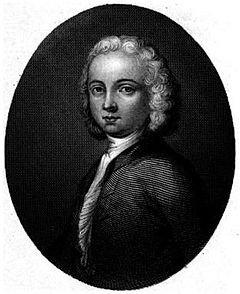 |
| William Collins |
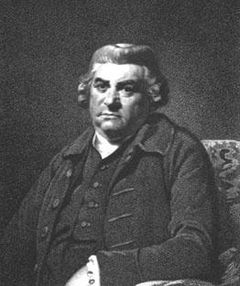 |
| Thomas Warton |
The Graveyard Poets included the better known Thomas Gray, Robert
Blair, and Edward Young, along with Thomas Percy, Thomas Warton, Thomas
Parnell, Thomas Chatterton, Oliver Goldsmith, Christopher Smart, James
MacPherson, William Cowper, William Collins, Joseph Warton, James Thompson,
Henry Kirke White, and Mark Akjenside.
graveyard poems are similar to two styles of poems, an ode – a lyrical poem
dedicated to someone or something, and an English Ballad, which is sung. They are descriptive, especially
concerning the physical horrors of death and the ache of bereavement.
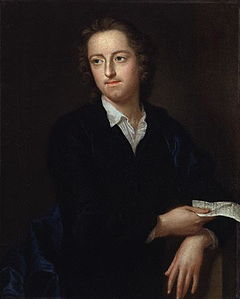 |
| Thomas Gray |
 |
| His most famous poem |
The
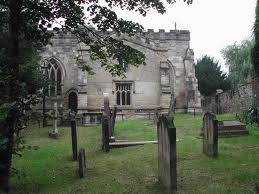
most well known of the Graveyard poets was Thomas Gray who wrote “Elegy Written
in a Country Churchyard.”
Gray wrote the poem in 1750 after the death of a family member and the
near death of a friend. The combination
of events caused him to begin an introspective study of mortality. Made up of
128 rhyming lines, the poem begins with the writer noticing the rich details in
the churchyard around him and ends with him contemplating his own death,
complete with epitaph.
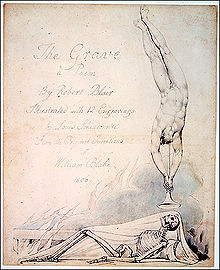 |
| The Poem “The Grave” |
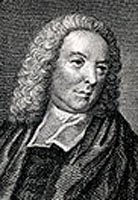
well-known Graveyard Poet was Scottish writer Robert Blair. His poem “The
Grave” consists of 767 lines of blank verse, dealing with death and the
graveyard.
 |
| Edward Young |
Normal
0
0
1
24
139
1
1
170
11.1539
0
0
0
Young’s nine-volume poem “The Complaint, or Night Thoughts on Life, Death and
Immortality,” became immensely popular and was transcribed into several
languages.
of the Graveyard Poets were able to catch the public’s attention through
thoughtful, albeit morbid prose that made each person take a closer look at
life – and possibly appreciate the inevitability of death.
WRITTEN IN
CHURCH-YARD”

tolls the knell of parting day,
lowing herd winds slowly o’er the lea,
ploughman homeward plods his weary way,
leaves the world to darkness and to me.
the glimmering landscape on the sight,
the air a solemn stillness holds,
where the beetle wheels his droning flight,
drowsy tinklings lull the distant folds:
from yonder ivy-mantled tower
moping owl does to the moon complain
as, wandering near her secret bower,
her ancient solitary reign.
those rugged elms, that yew-tree’s shade,
heaves the turf in many a mouldering heap,
his narrow cell for ever laid,
Forefathers of the hamlet sleep.
breezy call of incense-breathing morn,
swallow twittering from the straw-built shed,
cock’s shrill clarion, or the echoing horn,
shall rouse them from their lowly bed.
no more the blazing hearth shall burn,
housewife ply her evening care:
children run to lisp their sire’s return,
his knees the envied kiss to share,
the harvest to their sickle yield,
furrow oft the stubborn glebe has broke;
jocund did they drive their
team afield!
the woods beneath their sturdy stroke!
Ambition mock their useful toil,
homely joys, and destiny obscure;
Grandeur hear with a disdainful smile
and simple annals of the Poor.
of heraldry, the pomp of power,
that beauty, all that wealth e’er gave,
alike th’ inevitable hour:-
 The paths
of glory lead but to the grave.
ye Proud, impute to these the fault
o’er their tomb no trophies raise,
through the long-drawn aisle and fretted vault
pealing anthem swells the note of praise.
storied urn or animated bust
its mansion call the fleeting breath?
Honour’s voice provoke the silent dust,
Flattery soothe the dull cold ear of Death?
in this neglected spot is laid
Some
heart once pregnant with celestial fire;
that the rod of empire might have sway’d,
to ecstasy the living lyre:
Knowledge to their eyes her ample page,
the spoils of time, did ne’er unroll;
Penury repress’d their noble rage,
the genial current of the soul.

a gem of purest ray serene
unfathom’d caves of ocean bear:
a flower is born to blush unseen,
its sweetness on the desert air.
village-Hampden, that with dauntless breast
little tyrant of his fields withstood,
inglorious Milton here may rest,
Cromwell, guiltless of his country’s blood.
applause of list’ning senates to command,
threats of pain and ruin to despise,
scatter plenty o’er a smiling land,
their history in a nation’s eyes,
forbad: nor circumscribed alone
growing virtues, but their crimes confined;
wade through slaughter to a throne,
the gates of mercy on mankind,
struggling pangs of conscious truth to hide,
the blushes of ingenuous shame,
the shrine of Luxury and Pride
incense kindled at the Muse’s flame.
the madding crowd’s ignoble strife,
sober wishes never learn’d to stray;
cool sequester’d vale of life
the noiseless tenour of their way.
 Yet e’en
these bones from insult to protect
frail memorial still erected nigh,
uncouth rhymes and shapeless sculpture deck’d,
the passing tribute of a sigh.
name, their years, spelt by th’ unletter’d Muse,
of fame and elegy supply:
a holy text around she strews,
teach the rustic moralist to die.

to dumb forgetfulness a prey,
pleasing anxious being e’er resign’d,
warm precincts of the cheerful day,
one longing lingering look behind?
fond breast the parting soul relies,
pious drops the closing eye requires;
the tomb the voice of Nature cries,
our ashes live their wonted fires.
who, mindful of th’ unhonour’d dead,
lines their artless tale relate;
chance, by lonely contemplation led,
 Some
Somekindred spirit shall inquire thy fate, —
some hoary-headed swain may say,
we seen him at the peep of dawn
with hasty steps the dews away,
sun upon the upland lawn;
the foot of yonder nodding beech
wreathes its old fantastic roots so high.
listless length at noontide would he stretch,
upon the brook that babbles by.
yon wood, now smiling as in scorn,
his wayward fancies he would rove;
drooping, woeful wan, like one forlorn,
with care, or cross’d in hopeless love.

I miss’d him on the custom’d hill,
heath, and near his favourite tree;
came; nor yet beside the rill,
the lawn, nor at the wood was he;
with dirges due in sad array
through the church-way path we saw him borne,-
and read (for thou canst read) the lay
the stone beneath yon aged thorn.’
Epitaph

and to Fame unknown. Fair Science frowned not on his humble birth, And
Melacholy marked him for her own. Large was his bounty, and his soul
sincere, Heaven did a recompense as largely send: He gave to Misery all he had,
a tear, He gained from Heaven (’twas all he wish’d) a friend. No farther seek
his merits to disclose, Or draw his frailties from their dread abode (There
they alike in trembling hope repose), The bosom of his Father and his God.