.jpg) |
| Armed Forces |
 Each
Each
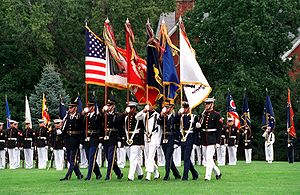
November 11th, we honor and celebrate those who have served in the
U.S. Armed Forces. This includes
veterans who have served in the U.S. Army, Navy, Air Force, Marines, and Coast
Guard.
 |
| Civil War Cavalry |
 |
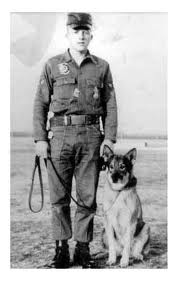
| WWII Vets |
But
there is one group of “vets” that is usually forgotten during this time – the military animals. These are the animals used to assist the military in combat,
and behind-the scenes. They have
been trained to act as scouts, sentries, trackers, messengers, and pack
animals; they have been used in battlefield experiments; to guard, carry,
patrol, detect explosives, and for search and rescue.
Horses

 The
The
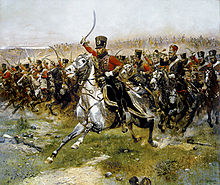
first animals documented as used for fighting were horses. They were originally used in chariot
warfare. But, once the saddle and
stir-up were invented, they became war-horses; carrying warriors into battle,
offering the rider a vantage point from which to fight and maneuver. In Medieval times, a knight’s horse was
used as a weapon; trained to bite and kick the opponent and his mount. Once
warriors and soldiers were on horseback, they organized into a fighting group
known as a cavalry.
 |
| Military Mule |
 |
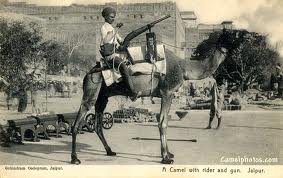
| Military Camel |
Horses
were not the only animals used in warfare. Dogs, oxen, and pigs were also used, many times to transport
or detect bombs. Elephants, mules,
donkeys, monkeys, rats, pigeons, bats, and camels have also been called into
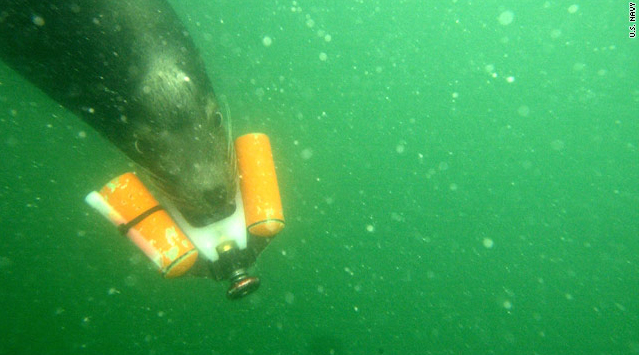
action. Dolphins, orcas and sea lions are now in active use.
Dogs
 |
| Egyptian War Dog |
 |
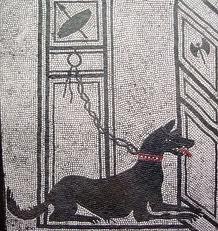
| Ancient War Dog |
Dogs
have been use by Egyptians, Persians, Greeks, Romans, Slavs and Britons since ancient times. They
have provided soldiers with protection, acted as scouts, trackers, messengers,
and guards.
 |
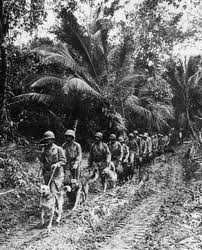
| WW II Soldiers & Dogs |
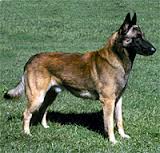 |
| A Belgian Malinois |
In
the 20th century, dogs continued to assist the troops. During WW I,
dogs delivered messages and communiqués to America’s allies. In WW II, dogs
were trained to drag the wounded and dead off the battlefield. During the
Vietnam War, dogs helped scout for mines, and patrol. And dogs are still
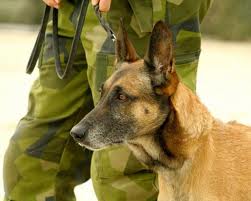
serving in all branches today. On
the May 1st, 2011 during the operation in which Osama bin Laden was
killed, a Belgian Malinois took part in the raid.
Elephants
 |
| War Elephant |
 |
| Elephants Attack |
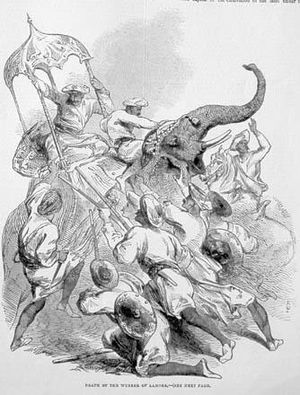
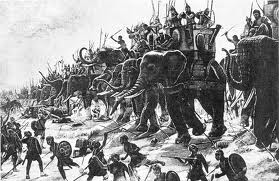
Elephants
were first used in battle around the 4th century BC. Designated as war elephants, they were
trained to charge the enemy, break their ranks, and trample them. Their use remained the same until the
advent of gunpowder in the 15th century. Elephants then began to be used as transport for humans and
battlefield equipment.
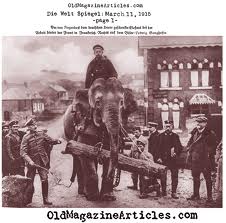 |
| WW I Elephant |
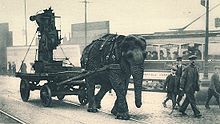 |
| WW II Elephant |
During
WW II, elephants were used to cross difficult terrain, and as heavy labor,
assisting crews in buildings bridges, and moving heavy munitions. Although elephants were still listed in
the 2004 U.S. Special Forces field manual, their use is discouraged as they are
now listed as an endangered species.
Pigeons
 |
| Pigeons in WW I |
 |
| A Soldier & his Pigeon |
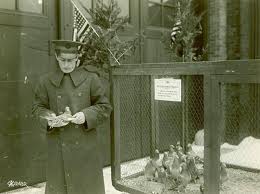
Pigeons
were first used in the Franco-Prussian War to carry messages past enemy lines.
In WW I, the U.S. Army Signal Corps used 600 pigeons in France to relay
messages. During WW II, American
and British forces used pigeons to send messages back and forth. The birds were
trained to carry tiny capsules that contained maps, messages and cameras. After the war, 32 pigeons, including
U.S. Army pigeon, G.I. Joe, received the Dickin Medal, the highest possible
decoration of valor given to animals.
Dickin
Medal
 |
| Awarding a Dicken Medal |
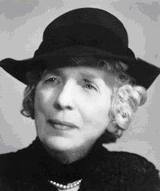 |
| Maria Dicken |
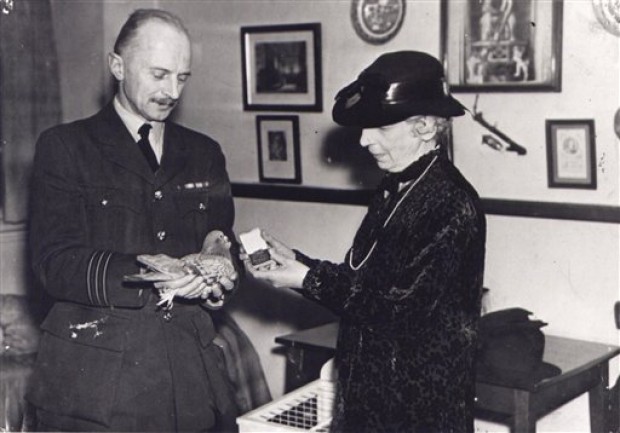
Maria
Dicken of Great Britain introduced the Dickin Medal in 1943. She created the
award as a way to honor any animal that displayed “conspicuous gallantry and
devotion to duty whilst serving with British Empire armed forces or civil
emergency services.”
 |
| Face of Medal |
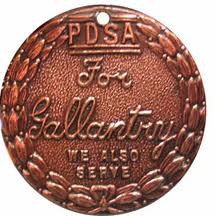
From
1943 to 1949, 54 animals received the award, which is inscribed “For
Gallantry” and “We Also Serve”. The
award is referred to as the animals’ Victoria Cross.
 |
| Theo’s Medal |
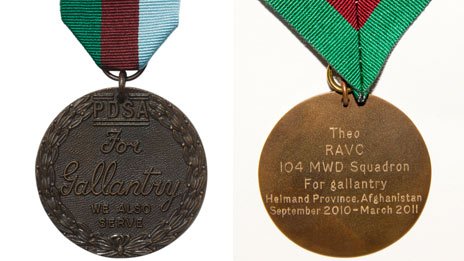
The
medal is still being given today; in 2002, three dogs were honored for their
assistance in the September 11th attacks. And on October 25, 2012, the Dickin Medal went to a British
service dog in Afghanistan. Theo, an English Spring Spaniel, received the medal
posthumously for having located the most improvised explosive devices (IEDs)
during the war, a record 14.*
Today
& Tomorrow
 |
| Military Dolphin |
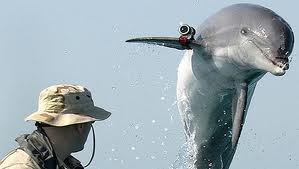
In
today’s military, animals still play a vital part in security and detection.
Along with the usual participants, Dolphins have been used by the military to
detect and locate mines, along with suspicious swimmers.
 |
| Military Sea Lion |
Sea
lions have been trained to tag mines, and to cuff unknown divers so that
sailors can hoist them up for identification.
 |
| Honey Bees |
 |
| Military Insects |
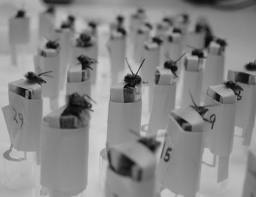
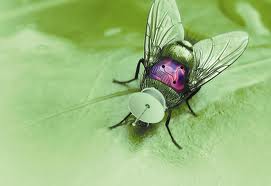
As
for the future, it has the look of a science fiction movie; Honeybees are now
being trained to recognize the scent of a bomb, and insects could be used to
gather or transmit information with a microphone implanted in their bodies.

 So
So
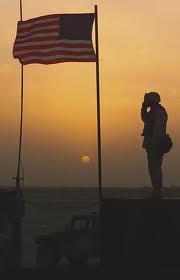
this Veterans Day, pause for a moment when remembering those who serve our
country, and also acknowledge those paws that help support our men and women on
the battlefield.
~ Joy
And in Remembrance:
*British
service dog, Theo, and his handler, Lance Corporal Liam Tasker, died during a
mission on March 01, 2011. The two
set a new record for bomb discoveries during their deployment time in
Afghanistan.
 Each
Each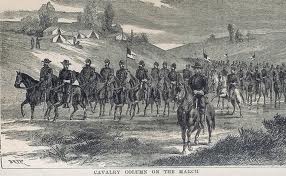
 The
The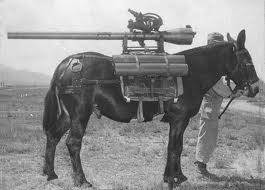

 So
So